
Investment Banking Networking
It is the process of connecting with professionals in the industry to learn more about their roles, get insights into the field, and build relationships that can eventually lead to job offers or referrals.
Investment Banking Networking: Strategies, Tips & Templates
Investment banking is one of the most competitive industries, and getting your foot in the door often requires more than just submitting your resume. Networking is the key to opening those doors. In this guide, we’ll explore everything you need to know about investment banking networking, including strategies, tips, and proven templates that will help you build relationships with professionals and boost your chances of landing a job or internship.
What is Investment Banking Networking?
Investment banking networking is the process of connecting with professionals in the industry to learn more about their roles, get insights into the field, and build relationships that can eventually lead to job offers or referrals. It’s a crucial step for anyone looking to break into the field, especially if you don’t have a background from a top-tier university or business school . For career changers or students from non-target schools, networking can be the most effective and sometimes the only path into investment banking.
Breaking into investment banking from a non-target school is possible—here’s your guide to making it happen
Why is Networking Essential in Investment Banking?
Investment banking is notorious for its highly competitive hiring process. Thousands of candidates apply for a limited number of roles, and simply submitting your resume online often isn’t enough to get noticed. Networking gives you the edge by allowing you to build personal relationships with professionals who can recommend you for interviews. It helps you learn more about different firms, their culture, and what recruiters are looking for, so you can tailor your approach more effectively.
Recruiters and bankers are more likely to take note of your resume when they recognize your name, making networking an essential part of the job search process.
Use our FREE investment banking resume template to make sure your resume gives you the best chance at securing an interview.
Key Strategies for Investment Banking Networking
There are three main strategies to follow when networking for investment banking roles:
1. Informational Interviews (Coffee Chats)
Informational interviews, also known as coffee chats, are one of the best ways to build relationships with investment bankers. These are informal meetings where you get to learn more about their careers, gather insights about the industry, and make a positive impression.
Steps to Conduct Informational Interviews:
- Find Names: Start by researching bankers on LinkedIn or using your school’s alumni network. Focus on those working at the firms you're interested in.
- Get Emails: Use tools like Hunter or Email Checker to find and verify email addresses.
- Request the Interview: Craft a polite and concise email to request a coffee chat. Don’t hesitate to follow up 2-3 times if you don’t hear back.
- Set Up the Call: Once the interview is confirmed, prepare by researching the banker’s background and having thoughtful questions ready.
- Conduct the Interview: Focus on asking insightful questions about their career journey and the industry. Listen more than you speak.
- Mini-Ask: At the end of the chat, ask for advice or if they’d be willing to pass your resume along internally.
- Follow-Up: After the interview, send a thank-you email and maintain periodic contact to nurture the relationship.

2. Cold Emailing
Cold emailing is another effective strategy, especially for early university students or recent graduates. It works particularly well if you’re from a target school or have experience with well-known brands. Bankers tend to check their emails frequently, making this method powerful.
Tips for Cold Emailing:
- Be direct in your initial email—ask about available internships or job openings.
- If you receive a “no” response, follow up politely every few weeks or months to stay on their radar.
- Target smaller firms (boutiques) as their hiring processes may be less formalized. However, don’t shy away from emailing senior bankers at larger firms, especially if your experience is relevant.
3. Cold Calling
Cold calling is often considered a last resort but can still be effective, particularly if you’re targeting smaller firms. This method involves calling bankers directly to inquire about available roles.
Steps for Cold Calling:
- Compile a list of your target banks along with contact details.
- Plan a concise pitch highlighting your interests and qualifications.
- Expect objections and be prepared to address them calmly.
- Follow up consistently until you get a clear answer—whether it’s a “yes” or “no.”
- Keep expanding your list of contacts, while checking back with previous connections for new opportunities.
Common Investment Banking Networking Mistakes to Avoid
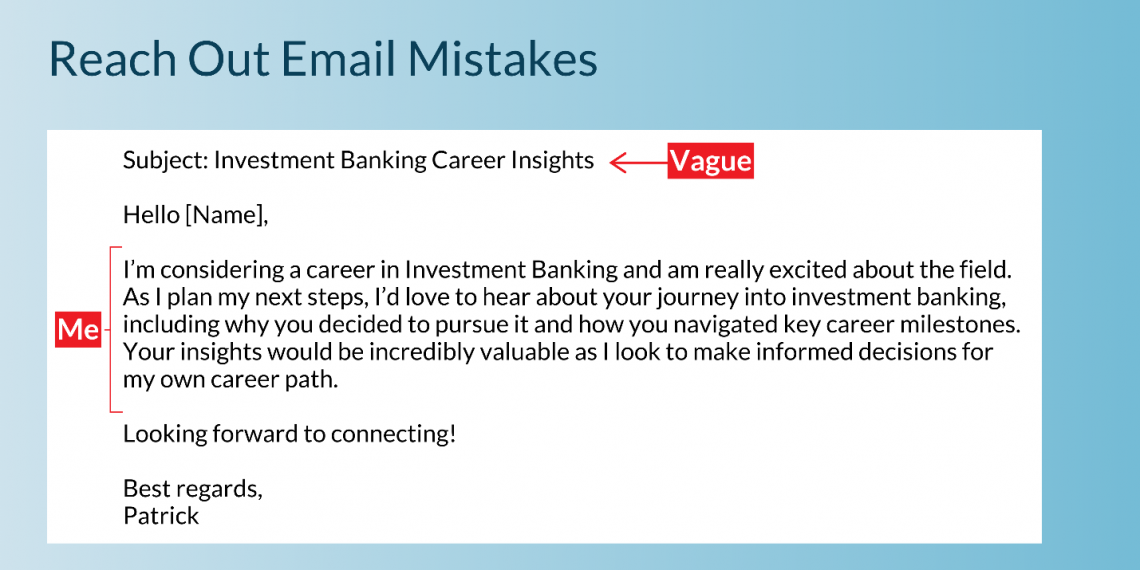
While networking is powerful, there are some common pitfalls you should avoid:
- Trying Too Hard to Impress: Be humble and ask for advice rather than trying to sound overly knowledgeable. Authenticity is key.
- Relying Too Much on LinkedIn: While LinkedIn is excellent for finding professionals, email is often better for communication. Be sure to use both strategically.
- Writing Long Emails: Keep your emails short and to the point. Bankers have little time, so a concise message increases your chances of getting a response.
- Failing to Follow Up: Persistence pays off, especially in investment banking. Always follow up politely if you don’t get a response after a reasonable amount of time.
- Asking the Wrong Questions: Avoid asking about sensitive topics like salary or work hours during initial conversations. Instead, focus on career advice and industry insights.
- Not Making a Direct Ask: Be clear about what you’re seeking. Whether it’s a resume referral or advice on how to improve your application, don’t hesitate to make a polite request.
Investment Banking Networking Toolkit
To streamline your networking efforts, Wall Street Oasis offers a comprehensive toolkit that includes scripts, templates, and guides. These resources are designed to help you approach networking systematically, making the process more manageable and increasing your chances of success.
Final Tips for Effective Investment Banking Networking
- Leverage Alumni Networks: Alumni are often more willing to help current students or recent graduates from their alma mater. Start there when reaching out.
- Quality Over Quantity: Focus on building strong, meaningful relationships rather than collecting contacts. Engage deeply to leave a lasting positive impression.
- Offer to Help: Networking is a two-way street. If you can offer help or provide value to your contacts, they’re more likely to return the favor when you need it.
Conclusion
Networking is a crucial component of landing an investment banking role. With these strategies, templates, and tips, you’ll be well-equipped to build a strong professional network and significantly boost your chances of landing that internship or full-time job. Remember to be patient, persistent, and genuine in your efforts, and you’ll find the path to success in investment banking.
If you’re ready to take your journey to the next level, apply to the WSO Academy today. We’re here to give you the guidance, coaching, and support to help you land that high finance offer—guaranteed. Let’s make your goals a reality!
Free Resources
To continue learning and advancing your career, check out these additional helpful WSO resources:


or Want to Sign up with your social account?