
Analyzing Distribution Patterns: Form 4 Outflows and Foundry Cycles


In the highly cyclical semiconductor industry, identifying inflection points requires looking beyond consumer-level narratives and examining quantitative corporate data. For institutional analysts evaluating capital flows, tracking executive equity distributions offers a transparent window into internal corporate perspectives. Rather than serving as prescriptive trading signals, these regulatory filings provide a factual baseline for understanding how leadership teams weigh current valuations against future operational hurdles, particularly in capital-intensive sectors like advanced wafer fabrication.
Contextualizing Macro Tech Liquidity
Evaluating single-firm metrics necessitates a broader sector comparison. Observably, recent Form 4 filings show a noticeable increase in executive sales across major tech companies. This macroeconomic distribution wave establishes a baseline of liquidity extraction among tech leadership, frequently corresponding with extended valuation multiples across the broader index. Analysts utilize this sector-wide context as a control variable when isolating and evaluating company-specific transaction behaviors to determine if a firm is mirroring or diverging from the macro trend.
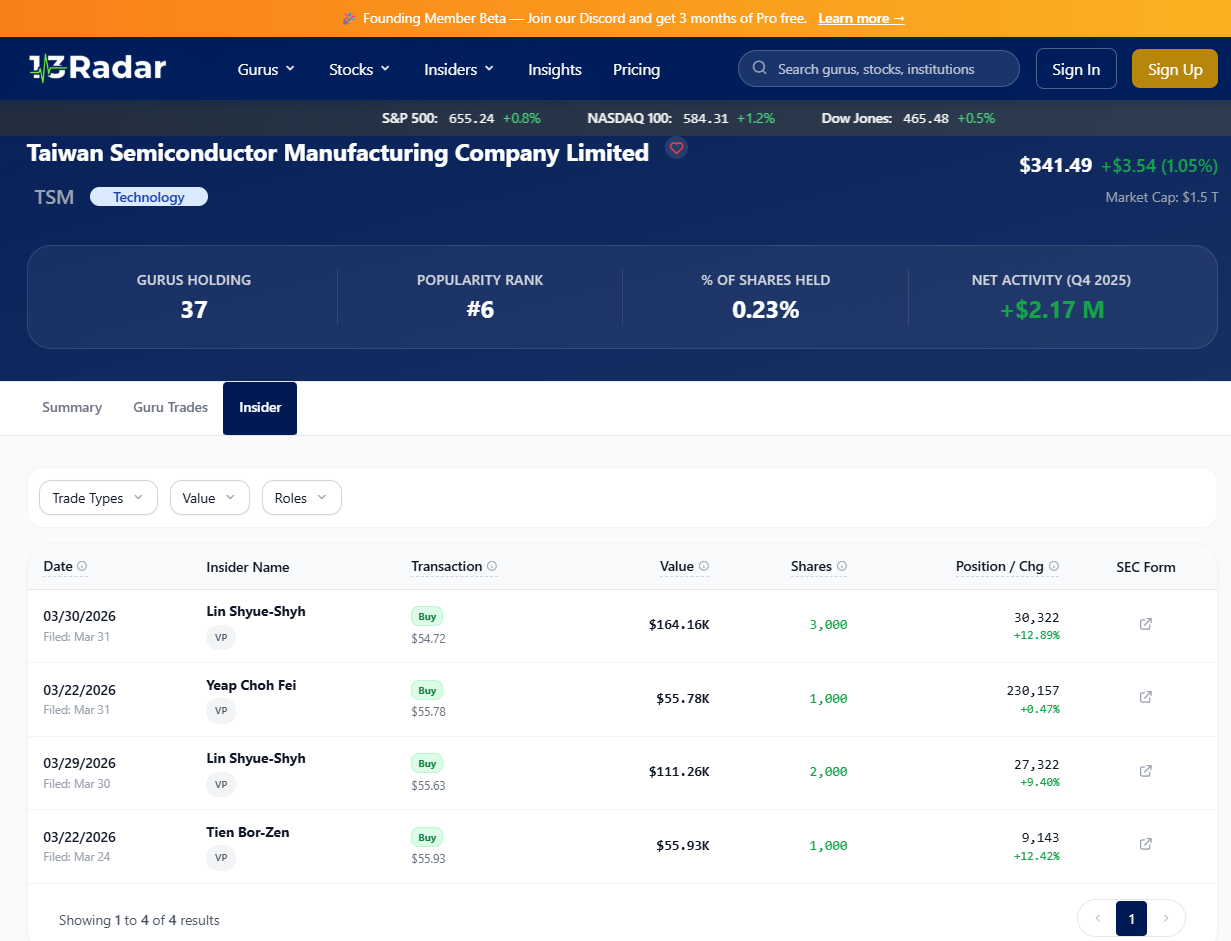
Evaluating the Foundry Distribution Curve
Against the backdrop of broader sector liquidation, analyzing firm-specific data points becomes an objective exercise in due diligence. By mapping the historical and current TSM insider selling trend, researchers can distinguish between routine compensation structuring, such as pre-planned 10b5-1 tax liabilities, and systematic equity distribution. A sustained pattern of multi-quarter equity reduction by key operational directors typically correlates with internal models projecting anticipated margin compression or a deceleration in downstream demand. This data provides a quantifiable metric for assessing internal risk models without relying on forward-looking public relations guidance.
CapEx Realities and Valuation Modeling
The operational reality of the foundry business involves astronomical capital expenditures, particularly concerning next-generation node development and overseas facility expansion. When executives consistently offload equity during phases of massive corporate infrastructure spending, institutional researchers frequently interpret this as a fundamental recalibration of internal risk assumptions. It highlights the mathematical tension between public valuation premiums and the physical costs of sustaining advanced manufacturing yields. For analysts constructing discounted cash flow models, incorporating these continuous liquidation patterns serves as a strictly objective input to accurately stress-test long-term margin and revenue projections.






Dolore velit qui adipisci minima exercitationem. Quis laborum aut nobis et ea expedita autem. In et cumque temporibus animi. Praesentium non illum rem vero enim corrupti. Consequatur ut ut eveniet quia officia sunt.
Ad aliquid recusandae delectus veniam dolorum. Perferendis esse voluptatem facere praesentium. Sit et non tempora amet omnis quo modi laborum.
Id et optio doloribus adipisci nihil aspernatur veniam. Quia molestias quasi voluptatem ipsum perferendis. Accusamus distinctio eos quis itaque repellendus excepturi. Quia sed laboriosam maiores maxime aliquid deserunt repellat quos.
Sapiente aut doloribus ratione maxime harum. Placeat aut sed natus eligendi ipsum. Modi incidunt fugit dolores sunt quaerat porro et. In rerum qui soluta voluptatum soluta. At dolor repudiandae veniam repellat. Et illum suscipit culpa officiis laborum quo itaque earum.
See All Comments - 100% Free
WSO depends on everyone being able to pitch in when they know something. Unlock with your email and get bonus: 6 financial modeling lessons free ($199 value)
or Unlock with your social account...