
The Liquidity Trap: Interpreting Insider Divergence in Q1 2026


In the current high-velocity market, the disconnect between price action and executive sentiment has reached a critical inflection point. While retail capital continues to chase momentum in the semiconductor and software verticals, a granular analysis of Form 4 filings reveals a starkly different narrative from the C-suite. For institutional investors, the primary objective now is filtering signal from noise.
Most regulatory filings are non-events—routine RSU vesting or tax-related dispositions. However, ignoring the aggregate trends is a mistake. The current data on insider trading suggests a defensive rotation is quietly underway. Executives are using the current liquidity abundance to exit high-beta positions while simultaneously accumulating equity in sectors that have been structurally under-owned for the last cycle.
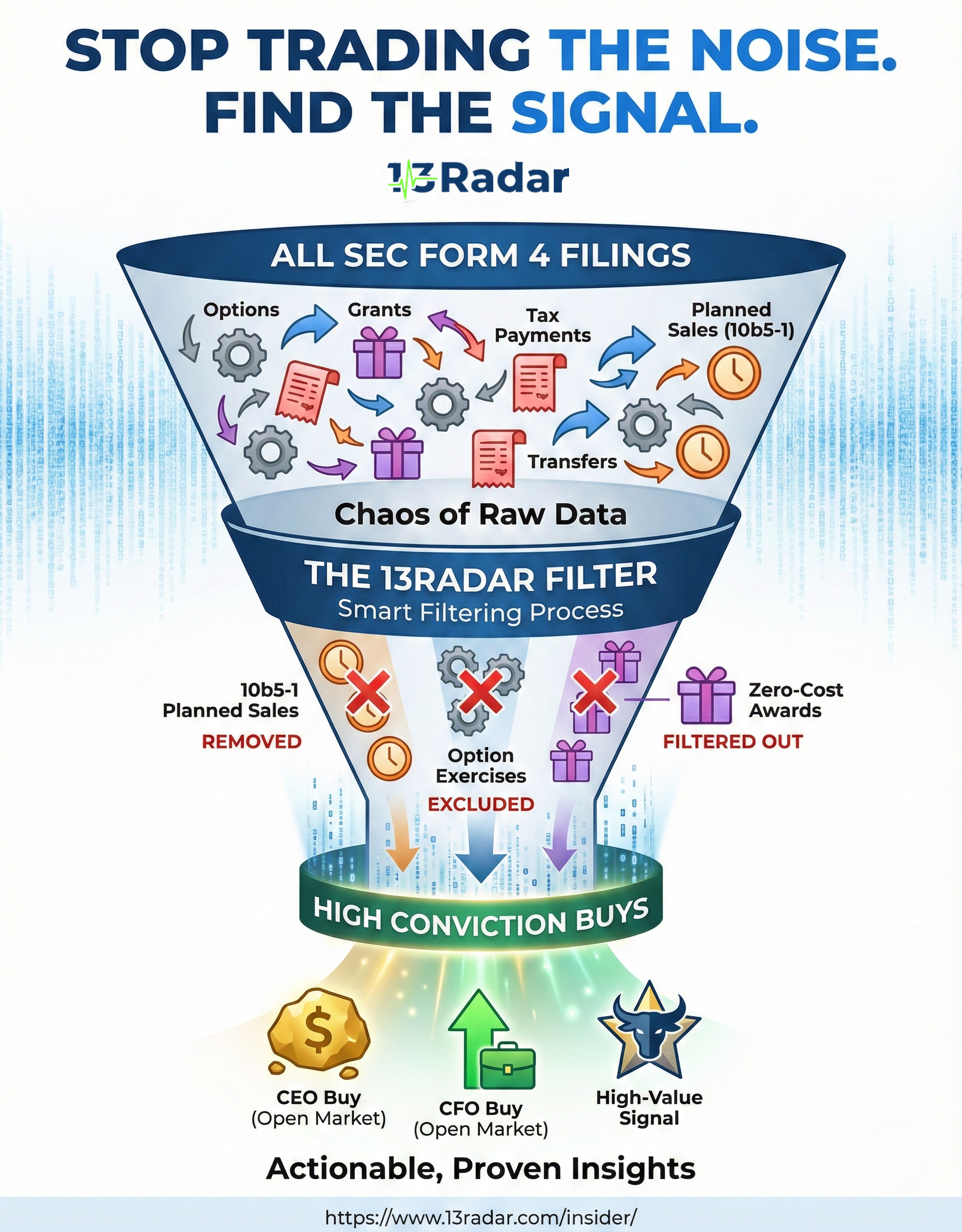
The "Cluster Buy" as a Valuation Floor
For those managing active portfolios, the "Cluster Buy" remains the highest conviction signal available in public data. Unlike a solitary purchase by a director, a Cluster Buy involves three or more officers (typically the CEO, CFO, and a 10% Owner) purchasing open-market shares within a 72-hour window. This behavior is rarely coincidental.
Why this matters now: We are currently observing a spike in cluster buying within the Energy Infrastructure and Regional Financials sectors. This indicates that management teams in these industries view their equity as significantly undervalued relative to the replacement cost of their assets. They are effectively establishing a valuation floor with their personal capital.
Deconstructing the "Sell" Signal
Wall Street often dismisses insider selling as "estate planning," but the velocity of selling tells a deeper story. When a CEO accelerates their 10b5-1 plan to liquidate 80% of their vested holdings during a stock's all-time high, it is a clear statement on capital allocation. It suggests that the internal rate of return (IRR) on their own stock has diminished relative to other opportunities.
- Routine Selling: Consistent, small blocks sold every quarter regardless of price. (Ignore)
- Opportunistic Selling: Large, irregular blocks sold into a parabolic rally. (Warning Signal)
- Liquidation: Complete exit of positions by departing founders. (Fundamental Shift)
The Sector Rotation Thesis
The most actionable alpha in the current market comes from identifying sectors where insider buying is accelerating while price action remains dormant. This divergence typically precedes a repricing event. The "Smart Money" is currently positioning for a shift from growth-at-any-cost to value-preservation and yield. Following the personal flows of those who see the monthly balance sheets before they are public is a prudent strategy for navigating the volatility ahead.






Doloribus et dolores natus debitis nisi alias nulla voluptas. Sunt minima tenetur sapiente possimus sit ut qui. Tenetur rerum rerum alias qui voluptas sit. Tempora architecto qui corporis dicta velit exercitationem.
Est inventore ipsa nihil autem ex iure dolor. Non id optio voluptatem corrupti eligendi. Voluptates ea ut optio minima quisquam itaque. Commodi voluptatem corporis iure saepe qui. Ea fuga maiores sit optio maxime non. Ut autem corrupti rem sed ipsam error.
See All Comments - 100% Free
WSO depends on everyone being able to pitch in when they know something. Unlock with your email and get bonus: 6 financial modeling lessons free ($199 value)
or Unlock with your social account...