|
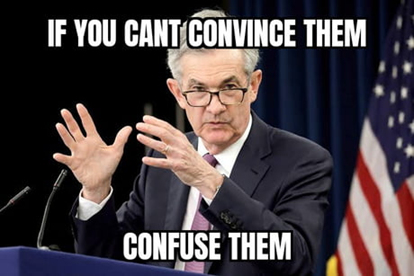
Mixed Messages — If you follow the Fed closely, you’re probably recognizing that Daddy JPOW’s team isn’t speaking with the swagger of a residential real estate agent in a leased BMW (with a big swinging deck, obvi) that we’ve come to expect from the Fed.
The Fed, like any good government entity, typically portrays the nation’s economic future with a hint of optimism. That’s not what we’re hearing lately, though: in a financial landscape shrouded in uncertainty associated with Russia’s war in Ukraine, debates over the level of monetary restraint needed to curb inflation, and persistent tightness in global supply chains, the Fed has a tough hand to play in this game of recession poker. Several prominent monetary policymakers have gone as far as to say that harsh policies and slower than desired economic growth might be required to tame the raging inflation beast.
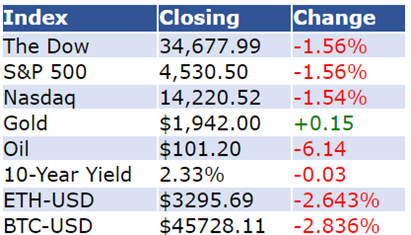
There has been a lot of chatter about a yield curve inversion. But is it warranted? It is worth talking about, sure. Is it worth panic-selling and hiding your money under your mattress? Not yet. The yield curve is determined by two major drivers: expectations for inflation and the Fed’s monetary policy outlook. A two/ten-year inversion tells us one thing for sure - investors expect that interest rates or inflation will be higher in two years than in ten.
Yield curves tend to invert during periods of intense, throbbing inflation. That throb basically sums up the inflationary environment after this 1Q2022. Yield curve inversion is one of many signals of recessionary headwinds.
Lucky for the Fed, both new and continuing jobless claims are relatively low, especially when compared to the beginning of the pandemic; these levels are probably the lowest we have seen since before you were born. Another boon for the Fed is a labor market with literally millions of open jobs waiting for any warm body to fill them. This type of labor market can help prevent a wage-price spiral, which, if realized, could result in devastatingly prolific inflationary pressures for the global economy.
Another significant macro-level uncertainty is the unwind of the Fed’s balance sheet, which is larger than at any other time in history. At March’s FOMC meeting, the Fed announced that it would discuss putting its balance sheet on a diet in future meetings, but there is debate amongst experts over the level of effect this will have on inflationary pressures and the economy’s health versus consistent and firm rate hikes in the coming months.
I left my crystal ball at home, but a few things are certain. The first is that Daddy JPOW has a handful of tough decisions ahead. Next, interest rates will rise, and the Fed will unwind its balance sheet. Will we have a recession? Will policy changes effect a soft landing? While the Fed’s inherent put is no longer on the table, only in time will we see the true effects of policy changes in the macro environment.
|










Facere enim dolor occaecati non dolorem quos. Neque expedita quo debitis dolor dicta error odit. Consequatur quidem voluptatem blanditiis in quidem eos velit. Debitis quam temporibus tempore dolore inventore recusandae culpa. Iusto aut eveniet aut quo quibusdam.
Voluptatem amet sed magni suscipit repellendus error aspernatur. Vel qui itaque sed neque sit. Earum alias ipsam et quae totam. Voluptas totam velit est dolore. Nulla eveniet quia corrupti ullam. Voluptatem quisquam in voluptas aut temporibus. Unde ratione dignissimos quis et velit non qui voluptatem.
See All Comments - 100% Free
WSO depends on everyone being able to pitch in when they know something. Unlock with your email and get bonus: 6 financial modeling lessons free ($199 value)
or Unlock with your social account...