


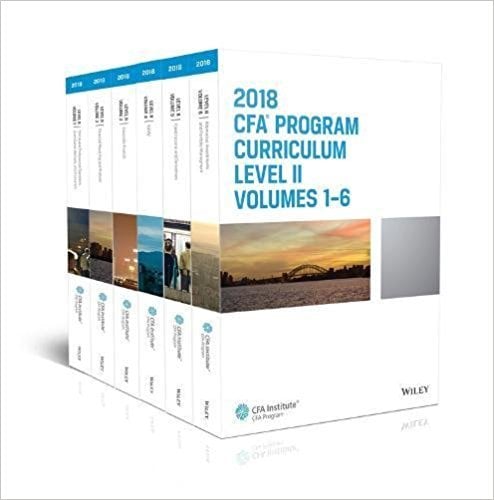
 Ahhh January, the wonderful month that you are. A month filled with ambitious New Year’s resolutions and regret about consumption habits throughout December. It is also the month when the worrying realisation that you have probably exchanged your 89th and 90th years for guaranteed fun now, and the dull thuds caused by both the Chartered Financial Analyst (CFA®) curriculum landing on your doorstep and the corpse of your social life landing next to it.
Worry not dear reader. You have made a commendable decision to continue your CFA®journey and it is a decision you will love in hindsight. To help you out, here are some tips on improving your chances of passing. As Howard Marks said, "Most investors’ results will be determined more by how many losers they have and how bad they are, than by the greatness of their winners."
So without further ado, how to fail the level 2 exam of the CFA® program:
1 - By not respecting the new format
There are two parts to this, the lower question count, and the vignette format.
Level 1:
- The first exam in the CFA® program covers a lot of material.
- 240 questions each separate from the last sounds daunting, but on the bright side, you are likely to get a reasonably even coverage of topics.
- This is good, because if you have not quite mastered a section, you can just guess the answer and move on, without losing too much.
- The second exam, however, is slightly different.
- There are 120 questions organised into 20 six-question vignettes.
- Each vignette covers a topic (sometimes two), so the coverage is much more concentrated, and you can end up with 6 questions (12 if you’re unlucky) where you’re left with educated guesswork and prayer as your only aids in answering.
- At the risk of stating the obvious, this is a much bigger problem, because with 120 questions, each is worth twice what it was in the level 1 exam, and now there are 6 of them covering the same topic.
Level 2 Tip: With the vignette format, read the vignette quickly, but not so quickly you miss crucial information. The numbers aren’t the only important information in there.
2 – By ignoring lower-weighted topics
300 Hours did an analysis of the level 2 results and found that one of the biggest differences between passing and failing candidates is not the performance in the big topics (FAA, equity, fixed income etc). The difference lies mainly in their performance on the smaller topics (econ, quant, alternatives etc).

- Don’t ignore the small topics.
- You can only get 100% correct in any topic and you’ll get diminishing marginal returns per hour spent studying it.
- If you’re already getting 70-80% correct on the big topics, you’ll probably benefit more from improving that 20% you keep scoring in econ, than pushing the 80% up to 87%.
3 - By doing too few practice exams & skipping the CFA® Institute practice exam
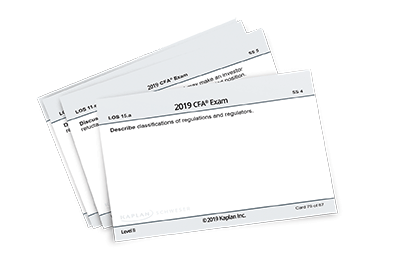 Do a practice exam about 4 to 6 weeks before exam day. This will be a soul-destroying exercise because it is likely that you will score lower than you had hoped. Freak out if you must, but once that exercise in self-indulgence is done, break the exam down by topic and patterns are likely to emerge.
- Bombed derivatives? Focus your study there for a few days.
- Forgot a formula? Write it on a flash card and revise it on the train to work.
- Then rinse and repeat.
- The CFA® Institute gives you a practice exam. This is probably the best resource you have to simulate the exam day, so make sure you do it at some point.
4 – By not planning properly
This last point is critical. I have definitely made heroic assumptions as to how much study material I would complete every day, only to be frustrated as I fell further and further behind. There are a few things I will point out:
If you have any tips of your own, questions or comments, please add them below. Good luck to everyone studying for the exams!
Mod Note (Andy): author's bio - James Crombie is a member of the 2016 Masters in Finance Class at London Business School. James started his career in Australia at Ernst & Young as an accountant, where he worked while completing his undergraduate degrees in finance and biomedical science. He then worked as an analyst at an Australian Asset Management firm covering Australian equities and derivatives and passed level 2 of the CFA® exam before shipping off to London. He plans to work in asset management in London upon graduation. He's a keen marathon runner, rugby player, and PG Wodehouse enthusiast and sits on the executive committee of the Investment Management Club at LBS
- Studying before work will be difficult but manageable and you’re likely to have a higher capacity to learn in the morning.
- Studying after work is unlikely to happen and probably will not be overly productive if it does, especially if you are finishing late.
- Make sure you build some buffers or days off into your timetable so if you accidentally find yourself at a football game on a Friday night (which happens to the best of us), or become unwell, you will not fall behind or burn out.





