


In this succinct yet striking article, Neil M. Barofsky, the special inspector general for TARP from 2008 until today shares his perspective on the bank bailout. He calls it a failure.
I've added about half of the article here, read the whole thing though as I cut some bits out. What do you think of this? Does the fact that banks now plan on governmental support in future crises signify any shift in the way banking will now be done? Should credit rating agencies even be including this in their analysis? How drastic a failure was this for Main Street compared to the windfall Wall Street enjoyed?
TWO and a half years ago, Congress passed the legislation that bailed out the country’s banks. The government has declared its mission accomplished, calling the program remarkably effective “by any objective measure.” On my last day as the special inspector general of the bailout program, I regret to say that I strongly disagree. The bank bailout, more formally called the Troubled Asset Relief Program, failed to meet some of its most important goals.Though there is no question that the country benefited by avoiding a meltdown of the financial system, this cannot be the only yardstick by which TARP’s legacy is measured. The legislation that created TARP, the Emergency Economic Stabilization Act, had far broader goals, including protecting home values and preserving homeownership.
These Main Street-oriented goals were not, as the Treasury Department is now suggesting, mere window dressing that needed only to be taken “into account.” Rather, they were a central part of the compromise with reluctant members of Congress to cast a vote that in many cases proved to be political suicide.
The act’s emphasis on preserving homeownership was particularly vital to passage. Congress was told that TARP would be used to purchase up to $700 billion of mortgages, and, to obtain the necessary votes, Treasury promised that it would modify those mortgages to assist struggling homeowners. But it has done little to abide by this legislative bargain.
Treasury, however, provided the money to banks with no effective policy or effort to compel the extension of credit. There were no strings attached: no requirement or even incentive to increase lending to home buyers, and against our strong recommendation, not even a request that banks report how they used TARP funds. Meanwhile, the act’s goal of helping struggling homeowners was shelved until February 2009, when the Home Affordable Modification Program was announced with the promise to help up to four million families with mortgage modifications.
That program has been a colossal failure, with far fewer permanent modifications (540,000) than modifications that have failed and been canceled (over 800,000). This is the well-chronicled result of the rush to get the program started, major program design flaws like the failure to remedy mortgage servicers’ favoring of foreclosure over permanent modifications, and a refusal to hold those abysmally performing mortgage servicers accountable for their disregard of program guidelines. As the program flounders, foreclosures continue to mount, with 8 million to 13 million filings forecast over the program’s lifetime.
Treasury Secretary Timothy Geithner has acknowledged that the program “won’t come close” to fulfilling its original expectations, that its incentives are not “powerful enough” and that the mortgage servicers are “still doing a terribly inadequate job.” But Treasury officials refuse to address these shortfalls. Instead they continue to stubbornly maintain that the program is a success and needs no material change, effectively assuring that Treasury’s most specific Main Street promise will not be honored.
In the final analysis, it has been Treasury’s broken promises that have turned TARP — which was instrumental in saving the financial system at a relatively modest cost to taxpayers — into a program commonly viewed as little more than a giveaway to Wall Street executives.
It wasn’t meant to be that. Indeed, Treasury’s mismanagement of TARP and its disregard for TARP’s Main Street goals — whether born of incompetence, timidity in the face of a crisis or a mindset too closely aligned with the banks it was supposed to rein in — may have so damaged the credibility of the government as a whole that future policy makers may be politically unable to take the necessary steps to save the system the next time a crisis arises. This avoidable political reality might just be TARP’s most lasting, and unfortunate, legacy.
| Attachment | Size |
|---|---|
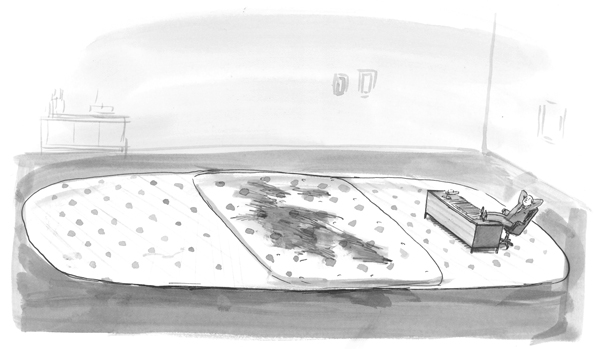
| tbtfbailout.jpg 79.49 KB | 79.49 KB |







TARP was to prevent the entire economy from crashing like 1929....and it worked. As for homeowners, the gov't doesn't give a shit, so well, obviously it didn't help with that. Life is unfair, play unfairly
i wouldnt say it was a colossal failure, i mean markets would be worse off without it. In addition, didnt the treasury (taxpayers) make a sizable profit from TARP?
Eos debitis temporibus neque ut nihil voluptatem alias. Cupiditate quis quia possimus harum. Nobis error praesentium nam quia harum ipsam earum cumque. Earum qui maiores explicabo. Aut illo quia odio. Totam nisi aliquid porro non.
Modi repellat ratione error nobis id. Esse enim repellat blanditiis ut et voluptate. Consequatur numquam voluptates corrupti. Et nisi eum vitae deleniti. Quis nisi repellendus iure excepturi voluptatem laudantium minima. Qui iste sed et.
See All Comments - 100% Free
WSO depends on everyone being able to pitch in when they know something. Unlock with your email and get bonus: 6 financial modeling lessons free ($199 value)
or Unlock with your social account...