
Entry-level Credit Analyst
Entry-level credit analyst evaluates creditworthiness, analyzes financial data, and assists in making lending decisions, minimizing credit risks for organizations.


What Is an Entry-Level Credit Analyst?
Modern financial systems depend on credit analysts because insurers and lenders utilize their research to extend credit to people and businesses.

The ability to do unbiased research is a crucial component of a credit analyst's job, especially for those who work for major international financial organizations.
It's crucial to comprehend the duties and qualifications needed for the position if you wish to work as a credit analyst. In this post, we walk you through what a credit analyst does, how to become one, what abilities are required, and some commonly asked questions.
To begin with, you need to understand the role of a credit analyst. An individual as a credit analyst should know about the key responsibilities and what the company benefits from them. They play a major role in the credit sector.
No one can agree on what credit analyst positions and career paths mean.
The existence of positions with similar titles, such as "credit risk analyst," "credit specialist," and "loan officer," only increases confusion.
Sadly, while they all have similar names, they are all fairly unique.
- Entry-level credit analysts should have a strong foundation in financial analysis to excel in their roles.
- Understanding how to assess and manage risk is crucial for a credit analyst. Developing industry-specific knowledge is essential for effective credit analysis, and clear and concise communication is vital.
- Seeking opportunities for further education and certifications, and staying informed about industry best practices will help enhance skills and advance in the career.
- Staying updated on industry trends, regulatory changes, and evolving credit assessment methodologies is crucial for continuous improvement in this field.
What Does A Credit Analyst Do?
A credit analyst, who often works for banks or investment companies, evaluates borrower creditworthiness. Determining a borrower's capacity to pay back a loan or bond also entails studying numerous financial accounts and reports.

Additionally, they monitor the creditworthiness of current customers and advise the lender on whether and how to extend a credit line. The role of a credit analyst in corporate banking is mostly applicable to commercial banking as well.
You'll still need to analyze your clients’ financial accounts, make estimates for various situations, write memoranda, monitor your borrowers, and cultivate connections with them to sell them other services like business credit cards or cash management.
Depending on the institution a credit analyst works for and the type of credit they are reviewing, their specific duties may change. Their regular duties often include:
- Examining financial records to determine a candidate's capacity to pay back a loan.
- Examining credit histories and other data to evaluate a borrower's overall creditworthiness.
- Making suggestions to a lender on whether to approve a loan or bond and aiding in the finalization of the loan conditions.
- Interacting with borrowers to obtain data and provide answers.
- Staying updated on relevant regulations and industry trends.
- Preparing presentations and reports on credit analysis results.
- Detecting and evaluating the likelihood of fraud and other financial crimes.
- Coordinating with other organizational areas to provide efficient risk management.
Some qualifications are needed to work as an entry-level credit analyst in financial institutions. In most institutions, credit analysts deal directly with corporate borrowers and individuals.
How to Become a Credit Analyst?
In some organizations, credit analysts must collaborate closely with loan officers or salespeople who interact with consumers one-on-one. Let’s examine the steps to becoming a Credit Analyst.

Achieve a Bachelor's Degree
Most entry-level credit analyst positions require a bachelor's degree in finance, economics, accounting, or business.
Developing a solid foundation in financial analysis, accounting, and economic principles makes comprehending financial statements and offering credit recommendations possible.
You have access to a wide range of job options in the financial industry if you pursue a degree in one of these subjects.
Get Practical Job Experience
Many credit analyst roles require at least a few years of prior employment in a related industry. To acquire relevant work experience, look for internships or entry-level positions in banking, accounting, or finance.
This can help you lay a solid foundation for key abilities, including risk management, credit analysis, and financial analysis.
NOTE
Developing soft skills will be beneficial in your future position as a credit analyst as well as provide you with knowledge of how financial institutions function.
Take Certification Exams
Pursuing certifications like Chartered Financial Analyst (CFA) or Chartered Accountant (CA) can enhance your credibility and make you more appealing to potential employers. These credentials indicate your expertise and dedication to the industry.
Because it demonstrates commitment, employers are more inclined to recruit someone who has made an effort to acquire extra education and certifications.
Expand Your Network
Developing connections with business leaders might help you learn about employment possibilities and build knowledge of a sector. To network, consider joining professional associations or attending trade shows.
NOTE
You can keep current on market changes and trends via networking, which is essential for maintaining your competitive edge.
Acquire Knowledge in a Variety of Fields
Consider specializing in corporate credit, sovereign credit, structured finance, or project finance, among other areas of credit research. Gaining expertise in several fields may make you more useful to a company and make you eligible for additional possibilities.
Additionally, it can broaden your awareness of the credit markets and increase your versatility in your position as a credit analyst.
Keep Informed of Market Trends
Credit analysis is a discipline that is continually changing. Being competitive requires being up to date on industry trends and rules. You may also use it to find fresh opportunities.
By subscribing to industry journals, attending conferences, and taking professional development courses, you can stay current on the latest trends and laws in your business.
Entry-Level Credit Analyst Salaries and Bonuses
Due in part to the fact that the term "credit analyst" may be used to describe dozens of various professions, it is regrettably very challenging to locate precise statistics on salary.

Please note that the salary figures provided are estimates and can vary depending on factors such as location, experience, company size, and industry conditions. The following are approximate salary ranges for different types of credit analysts:
1. Commercial Banking Credit Analyst
On the "credit" route, expect to start at a total pay of $60–80K (bonuses are 5–10% of base), rise to $100K+ over many years (with progressively increasing bonuses), and reach a maximum of $150–200K within 10 years.
Some Relationship Managers may make $300K+ or even above $400K for high achievers if they switch to the sales side. However, the average is probably between $200 and $300,000. You'll need to transition into a more executive role if you want to go past these levels.
2. Rating Level Credit Analyst
The pay here looks to be more in line with corporate banking figures; as an MD, you can expect to start at $100K+ all in and grow up to about $500K. The biggest distinction between "Associates" at credit rating agencies and "Analysts" at IB is often substantially lesser bonuses.
3. Normal Company Credit Analyst
Up until you reach the VP or executive level, you may anticipate a salary progression similar to that of the "commercial banking credit analyst" trend above, with salaries starting at $60–$80K and peaking at roughly $200K+.
NOTE
Because the fees are small and, in the case of typical businesses, it is not even a revenue-generating role, compensation for credit analysts is lower along the career path.
In comparison to M&A transactions or high-yield bonds, clients pay significantly less for credit ratings and views, and the charge percentage for commercial loans is lower than that for corporate banking services.
Additionally, banks have fewer items to "upsell" to these smaller businesses, making high remuneration harder to defend.
Pros and Cons of an Entry-level Credit Analyst Career Path
Credit analysts review individual or business customer files in addition to their regular tasks to find and choose past-due accounts for collection. They may also examine financial documents and credit data to assess the level of risk associated with granting credit or making a loan.

Credit Analysts meet with credit associations and other industry representatives on a weekly to monthly basis to share credit data. In order to assess the financial health of their clients, they could also produce financial ratios utilizing software.
There are some Pros and Cons for an Entry-level Credit Analyst. Before entering the working world in any sector, knowing about the Pros and Cons helps you to choose the field wisely and know the industry far better.
|
Pros |
Cons |
|
Obtaining entry-level positions in finance is far less difficult than in other fields, particularly if you started later in life, are older, or attended a university that is not a target institution. |
The task may get monotonous or repetitive, especially if you concentrate on keeping an eye on your current clientele. |
|
At least if you stick to the "portfolio management" part of commercial banking rather than the sales side, it's a very steady job. |
Compared to investment banking or corporate banking, the remuneration for entry-level positions is relatively poor.
And yes, you may "adjust for reduced hours"; nonetheless, absolute numbers are still important, particularly in high-priced places. |
|
In comparison to practically every other finance position covered on this site, it offers excellent hours and a wonderful work/life balance. |
Given that many "monitoring" duties don't require ongoing human involvement, there is some danger of automation. |
|
When the decreased hours and stress are taken into account, the remuneration at the highest levels can be pretty substantial. |
The wage cap is far lower than in industries like investment banking, private equity, mezzanine lending, direct lending, or commercial real estate. |
The career path for a credit analyst is excellent at the start and the finish but not so excellent in the midst. It is ideal if:
1. You intend to stick with it and ultimately work your way up to making $300K+ while putting in 40 hours per week.
2. You missed the university IB/PE/HF recruitment process or otherwise did not receive offers, and you prefer to be hired laterally into one of those fields than to spend money on an expensive MBA.
NOTE
The main issue with this job is that there aren't many choices available if you grow bored or exhausted in the middle, as in Year 5 or 6, and you want to make more money or do something else.
So, unless you're convinced you can reach the top and remain there for a long time, I think it's unwise to spend your "peak earning years" here.
But as long as you realize that it's more about the beginning and end than it is the route, a job as a credit analyst might be an extremely alluring side entrance into banking.
Entry-Level Credit Analyst Summary
The interview process for credit analysts is notoriously difficult. The employer needs to know you have the abilities, characteristics, and experience to carry out your tasks diligently and responsibly because of the amount of responsibility associated with the position.

You must demonstrate that you have the analytical and attention to detail abilities essential to function well in the position since it is unacceptable to put the organization's finances in danger.
The following four pointers will aid in preparing adequately for this important employment interview.
1. Prepare responses to the typical motivating credit analyst interview questions, such as: Tell me about yourself. Why did you choose this position? What makes you desire to work for our company? What are your advantages and disadvantages?
Be ready to provide well-thought-out answers that demonstrate your analytical abilities and attention to detail.
NOTE
Be prepared for both technical Credit Analyst questions and common behavioral inquiries!
2. Prepare for your interview by reviewing your technical knowledge. Practice the five Cs of credit analysis, the credit analysis procedure in general, and understand the interest coverage ratio, and many forms of credit analysis ratios.
3. Make sure you get a copy of the job description and person specification for the Credit Analyst post you are applying for. This is another crucial piece of advice we can provide you with.
Make a list of the many abilities and traits required for the job, and then consider past circumstances in which you have already proven your expertise.
4. Finally, prepare three insightful questions for your interview with a credit analyst. You will have the opportunity to ask questions after the interview.
Use this opportunity to demonstrate that you are excited about the position and want to learn as much as you can about the company's culture.
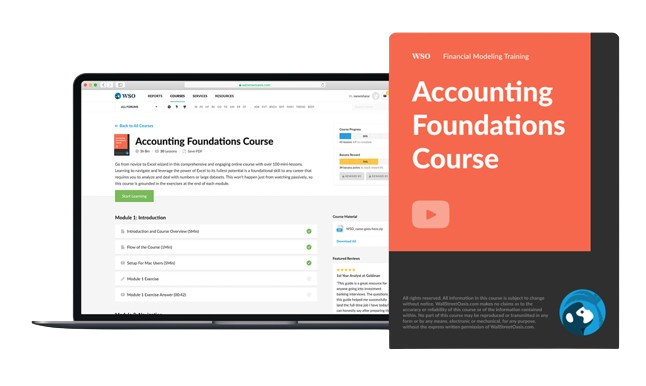
You may discover WSO’s very own Accounting Foundation Course here if you still need materials to help with your recruitment as a Credit Analyst.
Free Resources
To continue learning and advancing your career, check out these additional helpful WSO resources:


or Want to Sign up with your social account?