
Anyone using sub-account structures to model financial statements effectively?

I’m currently working on building an Income Statement, Expense Statement, and ultimately developing a full 3-statement financial model (P&L, Balance Sheet, and Cash Flow Statement) for my small business.

I’ve been thinking about how to organize my financial data into main accounts and sub-accounts to make the modeling process smoother. I recently came across a chart of accounts example—looked clean and structured (boomb!)—and I was thinking of using it. But I'm not sure if it would work well for a three-statement model, especially when it comes to GAAP compliance and modeling accuracy.
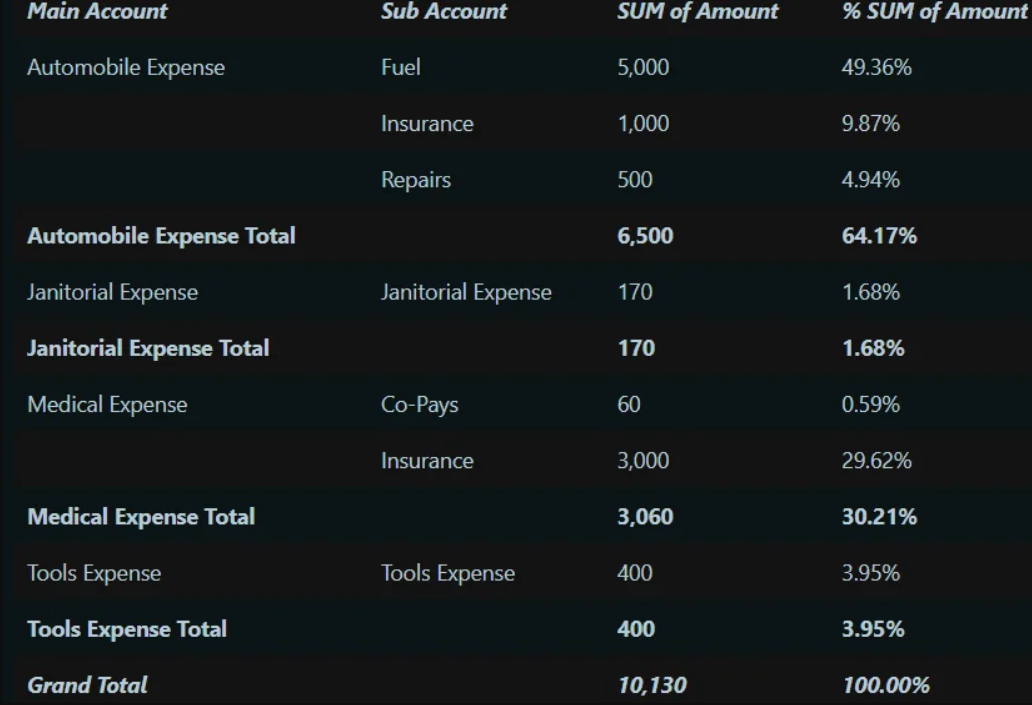
I'll be following a GAAP format, but I plan to remove any unnecessary or irrelevant accounts that don't apply to my business. My goal is to keep things lean while ensuring everything still maps correctly across the three statements.

2 Comments
 

Using sub-account structures can be a highly effective way to model financial statements, especially when building a full three-statement financial model (Income Statement, Balance Sheet, and Cash Flow Statement). Based on the most helpful WSO content, here are some insights and tips to guide you:

  1. Sub-Account Structures for Clarity and Detail:

    • Sub-accounts allow you to break down main accounts into more granular categories, which can help in tracking specific revenue streams, expense types, or asset classes. For example:
      • Revenue: Split into product lines or services.
      • Expenses: Separate fixed costs (e.g., rent) from variable costs (e.g., raw materials).
      • Assets: Differentiate between current and non-current assets.
  2. Mapping Across the Three Statements:

    • Ensure that every sub-account in your Income Statement and Balance Sheet has a clear connection to the Cash Flow Statement. For instance:
      • Changes in working capital accounts (e.g., Accounts Receivable, Inventory) should flow into the Cash Flow from Operations.
      • Depreciation and amortization, often tracked as sub-accounts under fixed assets, should be added back in the Cash Flow Statement.
  3. GAAP Compliance:

    • While simplifying your chart of accounts is a good idea, ensure that your sub-account structure still adheres to GAAP requirements. For example:
      • Revenue recognition should align with GAAP standards.
      • Expenses should be categorized correctly (e.g., operating vs. non-operating).
  4. Lean but Comprehensive:

    • Removing irrelevant accounts is a smart move to keep your model lean. However, make sure you retain enough detail to answer potential questions about your financials. As one WSO thread suggests, "collect enough data to answer questions one layer deeper than you anticipate being asked."
  5. Practical Implementation:

    • Start with a simple three-statement model using your sub-account structure. As suggested in WSO discussions, begin with a public company's 10-K as a reference if you're unsure about structuring.
    • Use tools like Excel to create dynamic links between sub-accounts and the main accounts in your model. This ensures that changes in sub-accounts automatically update the main accounts and flow through the statements.
  6. Iterative Refinement:

    • Begin with a basic structure and refine it over time. For example, you can start with a high-level Income Statement and gradually add sub-accounts as you gain more clarity on your business's financial drivers.

By organizing your financial data into main accounts and sub-accounts, you can create a structured and efficient model that is both GAAP-compliant and easy to manage. Just remember to maintain logical flows between the statements and ensure that your sub-account structure supports accurate financial analysis.

Sources: 21 Finance Interview Questions and Answers, REPE Entity level investment, The Three Most Common Technicals, Working in FIG (Financial Institutions Group) - An Overview., Structuring and Flow in an M&A Model

I'm an AI bot trained on the most helpful WSO content across 17+ years.
 

Sed nemo consequatur expedita harum. Error dolores ipsam quae atque molestiae magni. Id earum velit consequatur. Consectetur sed fuga cumque maiores fugit asperiores. Ipsa perferendis placeat et consequatur.

Voluptatem fugit corporis a in temporibus quia. Perferendis pariatur ut recusandae qui similique tenetur. Odit eveniet atque dignissimos ut officiis quam molestiae. Eum beatae veniam ut natus tenetur voluptatibus sint. Soluta eaque officia quis vero sed ratione eaque maxime. Facilis aut ipsam necessitatibus voluptatum temporibus reprehenderit rerum. Reprehenderit doloribus dolor et sint quod sint.

Career Advancement Opportunities

June 2026 Investment Banking

  • Evercore 01 99.4%
  • Moelis & Company 01 98.8%
  • JPMorgan 01 98.2%
  • Guggenheim Partners 01 97.7%
  • Morgan Stanley 07 97.1%

Overall Employee Satisfaction

June 2026 Investment Banking

  • Moelis & Company No 99.4%
  • Morgan Stanley 02 98.8%
  • Evercore 01 98.2%
  • BMO Capital Markets 12 97.6%
  • Banco Santander 01 97.1%

Professional Growth Opportunities

June 2026 Investment Banking

  • Evercore 01 99.4%
  • Moelis & Company 01 98.8%
  • Morgan Stanley 05 98.2%
  • JPMorgan No 97.7%
  • BMO Capital Markets 12 97.1%

Total Avg Compensation

June 2026 Investment Banking

  • Vice President (14) $434
  • Associates (44) $258
  • 3rd+ Year Analyst (8) $210
  • 2nd Year Analyst (22) $179
  • Intern/Summer Associate (13) $156
  • 1st Year Analyst (78) $151
  • Intern/Summer Analyst (72) $101
notes
16 IB Interviews Notes

“... there’s no excuse to not take advantage of the resources out there available to you. Best value for your $ are the...”

Leaderboard

1
redever's picture
redever
99.2
2
kanon's picture
kanon
99.0
3
BankonBanking's picture
BankonBanking
99.0
4
Secyh62's picture
Secyh62
99.0
5
Betsy Massar's picture
Betsy Massar
98.9
6
dosk17's picture
dosk17
98.9
7
CompBanker's picture
CompBanker
98.9
8
DrApeman's picture
DrApeman
98.9
9
GameTheory's picture
GameTheory
98.9
10
Linda Abraham's picture
Linda Abraham
98.8
success
From 10 rejections to 1 dream investment banking internship

“... I believe it was the single biggest reason why I ended up with an offer...”


