
Discussion: The Interaction of "Quality" and "Momentum" factors in recent Quant 13F filings (AQR Focus)


I've been looking at the recent positioning of major systematic funds to see how they are handling the current divergence between mega-cap tech and the rest of the market. There's a persistent stereotype that Cliff Asness and AQR are purely "Value" shops—constantly shorting high-multiple growth stocks and longing distressed assets. While the "Value Spread" is certainly a core part of their thesis, a deeper dive into the actual filings suggests a much more nuanced multi-factor construction than the headlines imply.
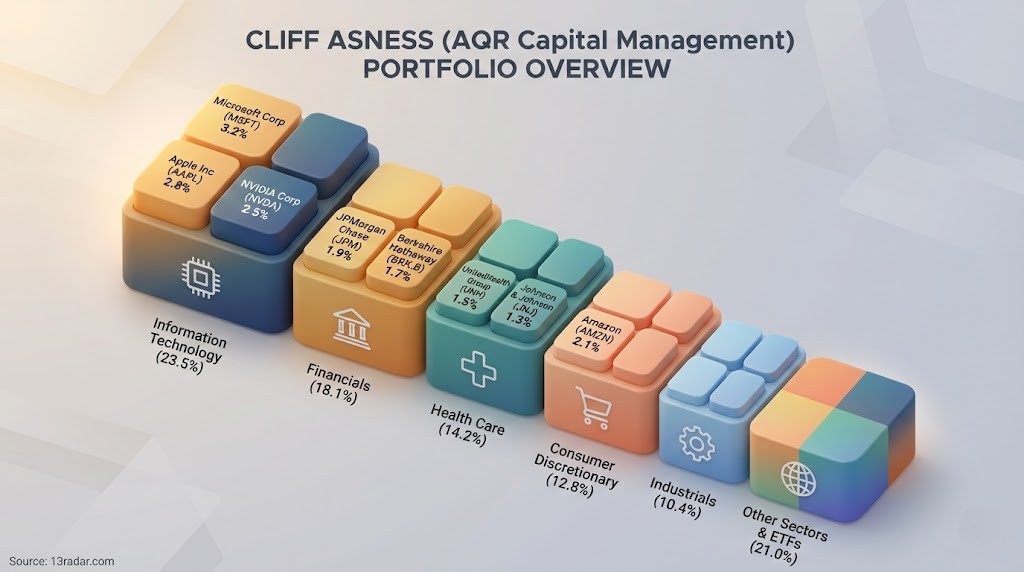
Specifically, I noticed an interesting pattern regarding the "Quality" overlay. It seems the pure "Value" factor is heavily constrained by profitability metrics right now, likely to avoid value traps in a higher-rate environment. Looking at the raw data for the cliff asness portfolio, the exposure isn't just "long cheap stuff." It appears to be a systematic bet on the intersection of price momentum and balance sheet quality, rather than a binary bet against growth.
The "Junk" Filter: QMJ (Quality Minus Junk) in Action
In quantitative finance literature, the "Quality" factor (often defined by high profitability, low earnings volatility, and safety) tends to have a negative correlation with market beta during drawdowns. What’s interesting in the current cycle is how this interacts with Momentum.
Blindly chasing Momentum (buying winners) in this market creates massive exposure to speculative bubbles. However, the filings suggest that the systematic approach is filtering out the "unprofitable growth" segment. Even when the portfolio holds tech names, they tend to be the cash-flow-positive giants rather than the speculative tail. This suggests the models are weighing free cash flow yield heavily alongside traditional price momentum signals.
Interaction Effects: Value is no longer a standalone factor
For those working in L/S equity or macro, you know that single-factor investing has suffered from significant decay. The alpha seems to be generated in the interaction terms. The positioning implies that "Value" works best when conditional on "Momentum" (i.e., buying cheap stocks that have just started to trend up).
This "Value with a Catalyst" approach avoids the "catching a falling knife" problem. It’s less about picking stocks and more about portfolio construction that maximizes the Sharpe ratio by diversifying across these specific factor intersections. The 13F data reflects this extreme diversification—thousands of positions—which is consistent with the Fundamental Law of Active Management (Grinold & Kahn): breadth is just as important as the information coefficient (IC).
Regime Change and Factor Durability
The discussion I want to raise here is: Are we seeing a structural shift where "Quality" becomes the dominant defensive factor over low-beta?
In a zero-interest-rate world, leverage was cheap, and "Junk" often rallied. In the current environment, cost of capital matters. The systematic rotation observed in these portfolios seems to be aggressively pricing in the cost of capital, penalizing high-leverage companies even if they screen as "cheap" on a P/B basis. It’s a good reminder that institutional quantitative strategies are dynamic, not static "set it and forget it" value screens.






Quod necessitatibus sit incidunt voluptatem. Molestiae quisquam id impedit adipisci vitae rem dignissimos. Deleniti vero officiis ut rerum fugit sit. Minima quis quibusdam dolorum sint nulla.
Voluptatibus laudantium aspernatur odit nemo. Ea possimus ipsa velit nulla aut beatae repudiandae aut. Maiores adipisci assumenda voluptate tempora reprehenderit. Molestiae assumenda repudiandae vel voluptatibus quia. Maxime architecto eos quasi delectus ut ut.
Reprehenderit esse cumque laborum dignissimos iure. Enim atque consequatur autem expedita quis dolore. Sint quod magni nesciunt. Optio qui ut deserunt adipisci.
See All Comments - 100% Free
WSO depends on everyone being able to pitch in when they know something. Unlock with your email and get bonus: 6 financial modeling lessons free ($199 value)
or Unlock with your social account...