
The Pivot to "Hard Tech": Analyzing the Sovereign Technology Thesis


For decades, a cultural and capital divide existed between Silicon Valley and the defense sector. Venture capital largely favored consumer software with low marginal costs over hardware-intensive government contracting. However, recent capital allocations associated with Peter Thiel’s ecosystem suggest a structural shift in this paradigm. The current macro environment, driven by geopolitical friction, appears to be realigning capital toward what is often termed "sovereign technology."
The "Bits to Atoms" Rotation
The prevailing thesis visible in these portfolio movements is a pivot away from purely digital consumer applications ("bits") toward physical, dual-use technologies ("atoms"). This includes defense technology, energy infrastructure, and logistics.
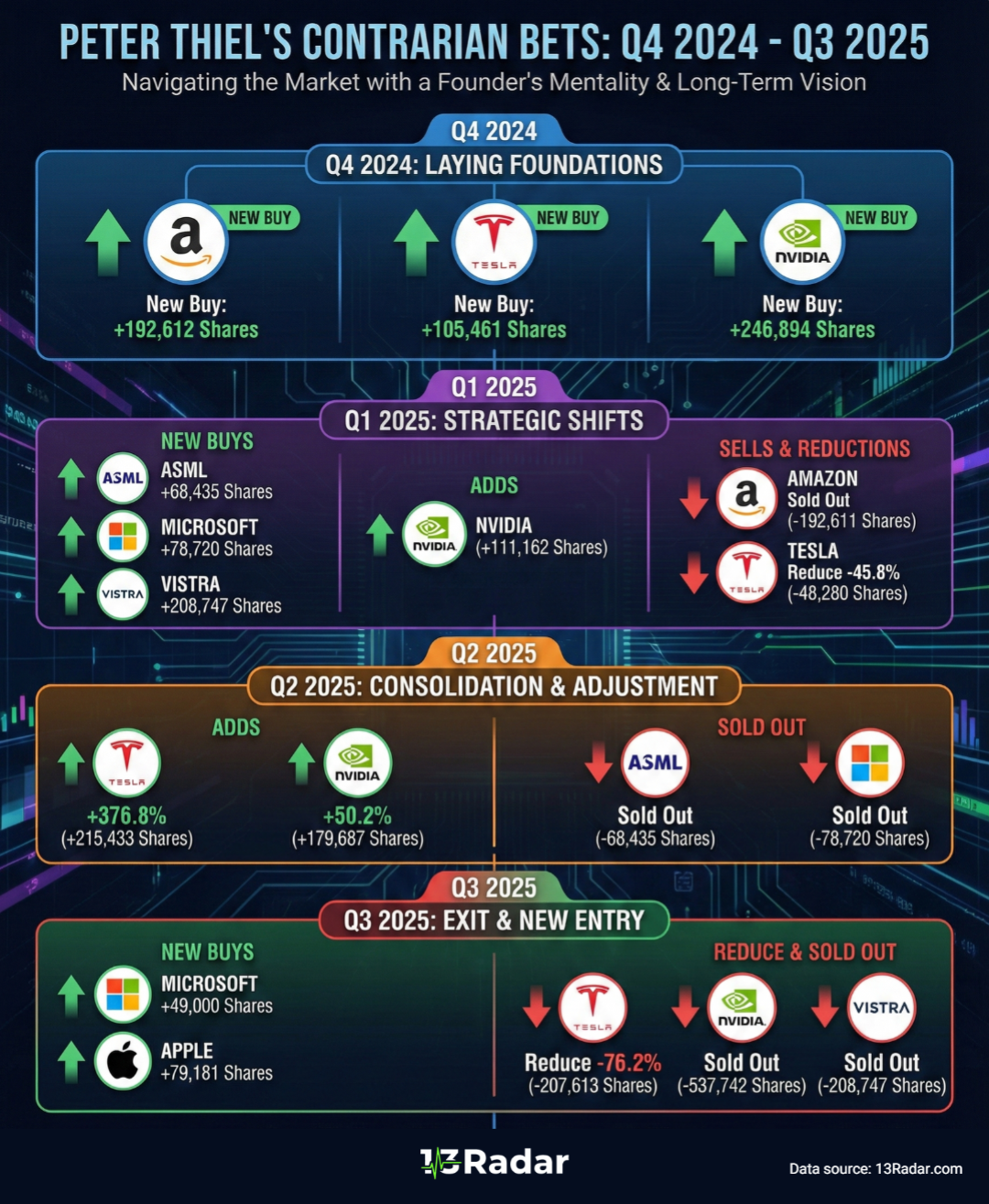
An analysis of the peter thiel stock portfolio data indicates a preference for companies that address systemic or existential risks rather than discretionary consumer spending. This moves the discussion from simple "growth investing" to a more complex assessment of public sector reliance on private sector innovation. The allocation strategy appears to bet on a future where government contracts become a primary revenue driver for tech firms, replacing the ad-revenue models of the previous decade.
Palantir and the "Zero to One" Structure
Thiel’s involvement with Palantir Technologies (PLTR) provides a case study in his "Zero to One" philosophy—specifically regarding monopolies.
Structural Analysis:
Rather than competing in crowded SaaS verticals, the strategy here focuses on high-barrier-to-entry markets (government intelligence and large-scale industrial data). The moat is not necessarily product superiority alone, but high integration costs and long sales cycles that deter competitors. From an institutional perspective, holding such assets suggests a preference for "sticky" revenue with high retention rates, distinct from the churn risks seen in B2C tech.
Counter-Consensus Capital Allocation
Another notable aspect of this investment style is its divergence from standard ESG (Environmental, Social, and Governance) frameworks. The portfolio often includes exposure to energy, defense, and crypto—sectors that have faced capital constraints due to institutional mandates.
The Contrarian Logic:
By allocating capital to sectors that others are structurally forced to avoid, the strategy attempts to capture value in under-capitalized industries. This isn't necessarily a "buy" signal for the broader market, but rather an observation on how contrarian funds seek alpha: by providing liquidity where the consensus refuses to go. It raises a question for the WSO community: Is the "Hard Tech" trade a temporary geopolitical hedge, or a secular rotation out of consumer internet?






Rerum consectetur ducimus quis deleniti itaque recusandae consectetur. Et aut dolorum tempora perferendis omnis non id. Ut vel id tenetur aut. Et veniam sed fugit et non. At eos corrupti perspiciatis natus. Perspiciatis modi iure est vel aut nihil quis.
Numquam odit tempore accusantium et suscipit laudantium ea. Fugiat aperiam illum repudiandae aut. Error vel omnis voluptates voluptatem minima.
See All Comments - 100% Free
WSO depends on everyone being able to pitch in when they know something. Unlock with your email and get bonus: 6 financial modeling lessons free ($199 value)
or Unlock with your social account...