
Thesis Deconstruction: Scion's Bet on Real Assets vs. Nominal Returns


While the broader market consensus has largely accepted the "immaculate disinflation" narrative, a review of recent institutional capital flows suggests a significant divergence in views among high-conviction managers. Michael Burry’s Scion Asset Management appears to be positioning for a regime of structural inflation volatility. Rather than chasing beta in the technology sector, the fund's recent activity highlights a rotation into tangible value and a distinct hedging strategy against currency debasement. This allocation shift presents a contrarian view on the durability of the current fiat purchasing power.
Macro Thesis: The Persistence of Cost Push
The allocation strategy observed in recent filings indicates a skepticism regarding the Federal Reserve's ability to maintain the 2% inflation target in a high-deficit environment. The portfolio construction favors companies with high tangible book value and pricing power—specifically in shipping, energy, and physical commodities. A quantitative breakdown of the michael burry portfolio shows a correlation between these holdings and historical inflation super-cycles. The implied thesis is that hard assets offer a superior risk-adjusted return profile compared to long-duration nominal bonds in the current fiscal backdrop.
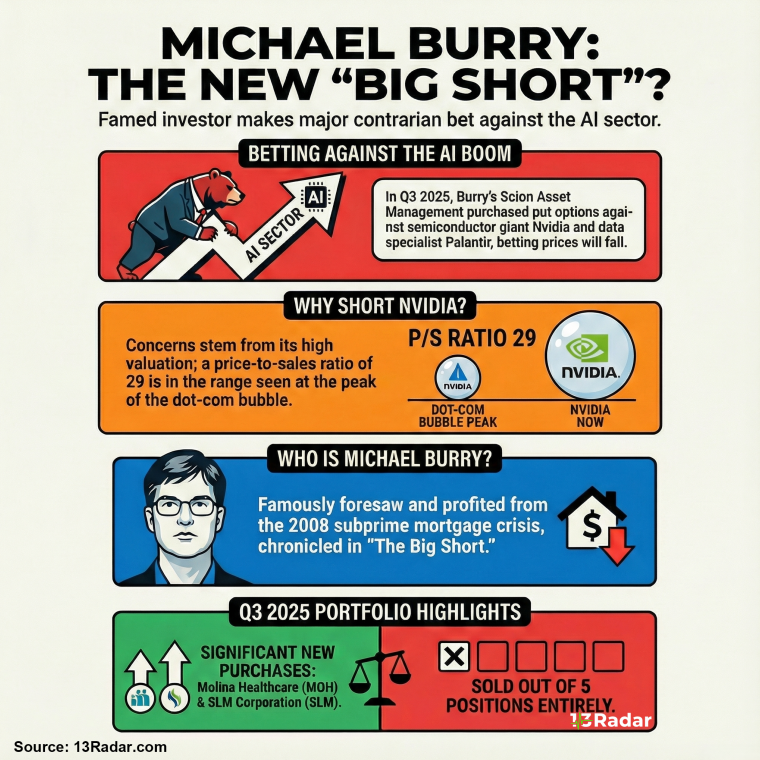
📊 SECTOR DIVERGENCE: The Long/Short Spread
The structural setup of the portfolio reveals a pair trade logic that goes beyond simple stock picking. The strategy appears to be isolating specific macroeconomic factors:
Long Volatility (Physical): Exposure to physical gold trusts and energy transport, serving as a hedge against geopolitical friction and currency devaluation.
Short Durability (Consumer): The utilization of put options against broad indices or consumer discretionary ETFs suggests a bearish view on consumer credit elasticity.
Leverage Aversion: A distinct avoidance of companies with high debt-to-EBITDA ratios, which are vulnerable in a "higher-for-longer" rate environment.
Implications for Portfolio Correlation
This positioning challenges the traditional 60/40 portfolio model. By overweighting real assets and hedging broad market exposure, the strategy reduces correlation to the S&P 500's multiple expansion. It suggests that alpha in 2026 may not come from growth factor exposure, but from correctly identifying the disconnect between nominal asset prices and real economic output. Whether this "inflation resurgence" thesis materializes remains the primary variable, but the capital commitment to this view is substantial.






Exercitationem aut totam delectus amet suscipit. Sunt facilis sit iure dolores saepe quisquam. Dolores ipsam id possimus voluptatum fugiat aspernatur adipisci. Aperiam odit inventore quia mollitia rerum laborum. Asperiores magni ipsum ut sed iusto dicta quia. Tempora fugit minus consequatur earum voluptate optio numquam.
See All Comments - 100% Free
WSO depends on everyone being able to pitch in when they know something. Unlock with your email and get bonus: 6 financial modeling lessons free ($199 value)
or Unlock with your social account...