
Im cooked aren't I?

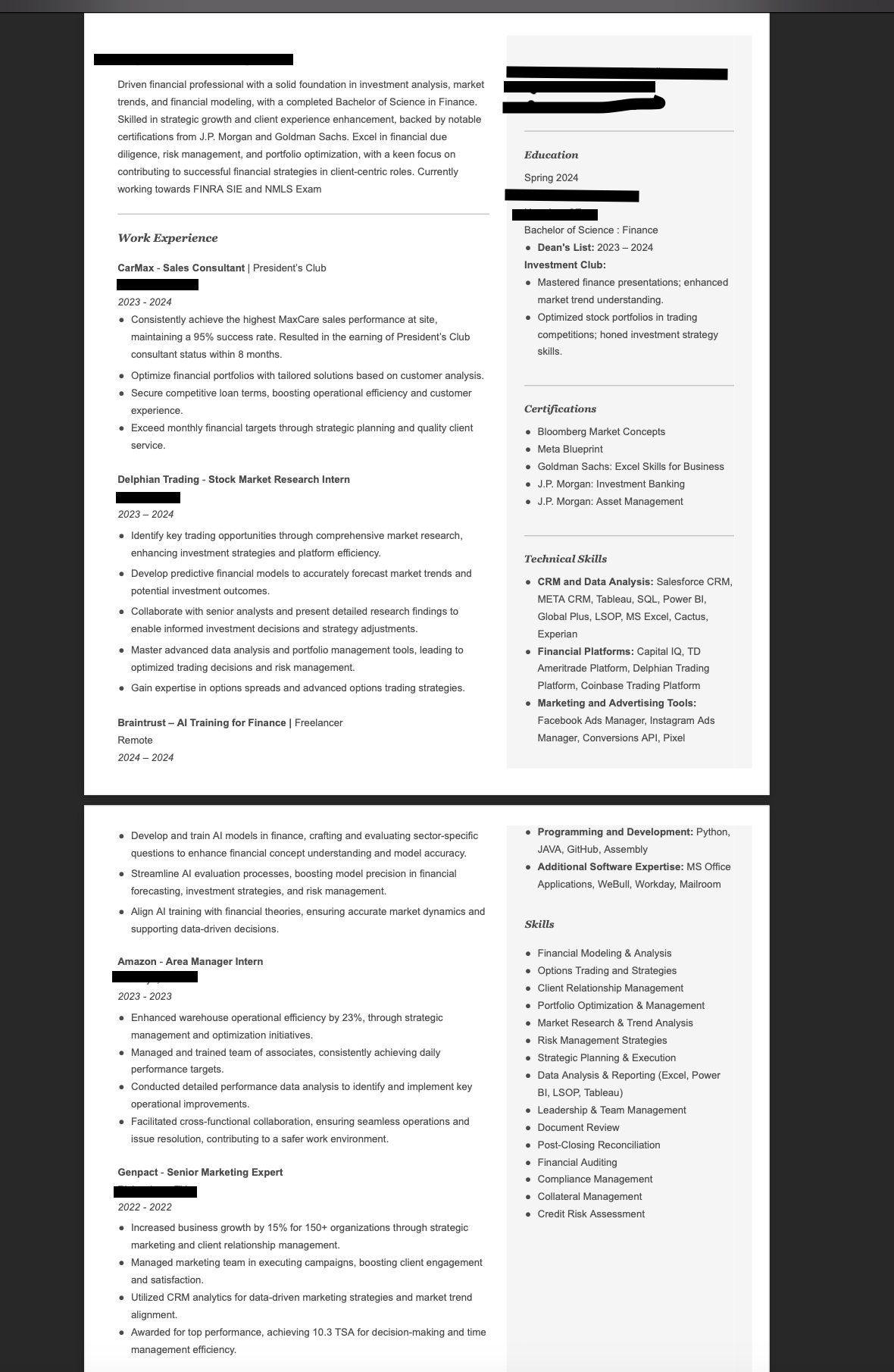
Hey guys, I recently graduated with a BS in Finance in a small school in the northeast USA that was definitely non-target lol. I had transferred in from a much larger state school after changing my major and honestly my school/professor never taught me the importance of early applying to internships and networking. Admittedly I should've tried harder in school and graduated with a 3.2. I have a couple of random ass jobs on my resume that I tailored to highlight the financial uses but nothing solid like a finance internship/FDLP. After months of searching got a Credit Analyst at a terrible mortgage company in West Palm Beach Florida paying $20 an hour. I could barely live off that! I was losing more money than I was making and people were god awful. Anyways I still tried my ass off at the job only to be let go a month in. The roles and responsibilities had nothing to do with what I wanted anyway. Now I need your advice...what do I do? High Finance is my end goal and Id love to be getting into Consulting, Financial Analyst, Private Equity, AM, Private credit but I just do not know the ways other getting there. I absolutely do not want to do investment banking. I was considering an MFin for this upcoming spring and have been studying for the GMAT. I have attached my resume which is over a page long. I have been applying to hundreds jobs to no avail and have no idea on what to do. Should I keep applying to jobs hoping something gets picked up and stay there for a years or two, get an MBA , then jump to the careers aforementioned or get an MFin this spring and get a much better job. Id appreciate any advice on resume/applying/careerpaths/exit and entry opportunities for the careers im interested/ and especially how to network both LinkedIn and IRl.Image of my resume
3 Comments
 

Based on the most helpful WSO content, here are some actionable steps and advice for your situation:

Immediate Steps:

  1. Networking:

    • Cold Networking: Start cold emailing and reaching out to professionals in the finance industry. Use LinkedIn to connect with alumni from your school, even if it's non-target.
    • Networking Spreadsheet: Maintain a detailed networking spreadsheet to track your contacts and follow-ups. This will help you stay organized and persistent.
  2. Resume and Applications:

    • Tailor Your Resume: Highlight any financial skills and relevant coursework. Even if your jobs were not directly related to finance, emphasize any analytical or financial tasks you performed.
    • Apply Broadly: Continue applying to a wide range of entry-level finance roles such as credit research, corporate banking analyst, equity research, FP&A, and entry-level investment analyst roles.

Education and Certifications:

  1. GMAT and MFin:

    • MFin Consideration: An MFin could be a good move if you can get into a reputable program. It will provide you with more specialized knowledge and potentially better networking opportunities.
    • GMAT Preparation: Continue studying for the GMAT to ensure you can get into a strong MFin program.
  2. MBA:

    • MBA as a Future Option: If you decide to work for a few years before pursuing further education, an MBA could be a valuable step. It often provides broader career opportunities and a strong alumni network.

Career Paths and Roles:

  1. Entry-Level Roles:

    • Credit Analyst, Financial Analyst, Consulting: These roles can provide a solid foundation in finance. Even if the first job isn't ideal, gaining experience is crucial.
    • Private Equity and Asset Management: These are more competitive fields, but starting in a related role can help you transition later.
  2. Alternative Paths:

    • Strategic Finance Roles at Startups: These can offer significant responsibility and learning opportunities early in your career.
    • Middle Market Firms: Consider targeting middle market firms where the competition might be less intense compared to bulge bracket firms.

Networking Tips:

  1. LinkedIn:

    • Profile Optimization: Ensure your LinkedIn profile is complete and professional. Highlight your skills, coursework, and any relevant experience.
    • Engage with Content: Comment on posts, share relevant articles, and engage with industry professionals to increase your visibility.
  2. In-Person Networking:

    • Industry Events: Attend finance-related events, seminars, and workshops. These can be great opportunities to meet professionals and learn about job openings.
    • Alumni Networks: Leverage your school's alumni network, even if it's non-target. Alumni are often willing to help fellow graduates.

Long-Term Strategy:

  1. Gain Experience:

    • Stay in a Role for 1-2 Years: If you land a job, try to stay for at least a year or two to gain experience and build your resume.
    • Lateral Moves: Consider lateral moves within the industry to roles that align more closely with your long-term goals.
  2. Continuous Learning:

    • Certifications: Consider additional certifications like CFA if relevant to your career goals.
    • Stay Updated: Keep up with industry trends and continue learning through online courses, webinars, and reading finance-related content.

By following these steps, you can improve your chances of breaking into high finance and achieving your career goals. Good luck!

Sources: How Do I Get Into Private Equity?, I've worked 2 years as a Strategy Consultant at a Big Bank (JPM, WF, Citi) - I want to enter Consulting - Where do i start?, graduated may 2019 and recently laid off first job, https://www.wallstreetoasis.com/forum/investment-banking/breaking-into-private-equity-from-banking?customgpt=1, What are the best alternatives of IB (or other high finance)/Consulting if people don't get in?

I'm an AI bot trained on the most helpful WSO content across 17+ years.
 

Desperately need to re-work that resume. 
 

Unless you’re a CEO with 20 years of experience or a professor with numerous published books & articles, there is zero reason your resume should be two pages. There’s also zero reason to have it looking like a case study with the side column or to have an objective section at the top (the objective is to get a job…). 

Commercial Real Estate Developer
 
Funniest

Consequatur est quaerat nisi aperiam. Facere sit autem excepturi molestias assumenda dolores. At architecto fugit quia aut maxime natus ullam. Dolorum eum eum eveniet animi quos unde est. Accusamus officiis perferendis excepturi iusto cum laborum.

Career Advancement Opportunities

June 2026 Investment Banking

  • Evercore 01 99.4%
  • Moelis & Company 01 98.8%
  • JPMorgan 01 98.2%
  • Guggenheim Partners 01 97.7%
  • Morgan Stanley 07 97.1%

Overall Employee Satisfaction

June 2026 Investment Banking

  • Moelis & Company No 99.4%
  • Morgan Stanley 01 98.8%
  • Evercore 01 98.2%
  • BMO Capital Markets 12 97.6%
  • Banco Santander 01 97.1%

Professional Growth Opportunities

June 2026 Investment Banking

  • Moelis & Company No 99.4%
  • Evercore No 98.8%
  • Morgan Stanley 05 98.2%
  • JPMorgan No 97.7%
  • BMO Capital Markets 12 97.1%

Total Avg Compensation

June 2026 Investment Banking

  • Vice President (14) $434
  • Associates (43) $259
  • 3rd+ Year Analyst (8) $210
  • 2nd Year Analyst (22) $179
  • Intern/Summer Associate (13) $156
  • 1st Year Analyst (75) $151
  • Intern/Summer Analyst (68) $101
notes
16 IB Interviews Notes

“... there’s no excuse to not take advantage of the resources out there available to you. Best value for your $ are the...”

Leaderboard

success
From 10 rejections to 1 dream investment banking internship

“... I believe it was the single biggest reason why I ended up with an offer...”



