
Would this be a good use of money?


What's up monkeys,
So i got a question about PE and basically how small they can go. Let me start off by saying my basic understanding of the PE business plan before I go on to my question. Essentially they: 1.) Look for a good deal to become an owner of a business (preferably an underpriced deal due to current poor management, lack of utilizing growth opps, or any other means which they deem to be make the deal price currently "undervalued") 2.) Use some amount of debt that the PE firm finds ideal to leverage their returns and enter into the deal and become an owner 3.) Improve the company's cash flows while paying down debt thus increasing equity 4.) Eventually sell off company at higher price than bought because of the improvements they have implemented
Now assuming thats correct I'll move on to my question and try to keep it as brief as possible. Depending on the size of the PE firm they may invest anywhere from millions of dollars to billions of dollars on these deals. Now what I am asking is way off the spectrum in those regards. Are there any companies that do like 150k equity investments in their deals? Now hear me out. Just to pull some imaginary examples out of my ass. Lets say Carlyle finds some telecom business that they think is mismanaged (or whatever other reason that they think it could be preforming better), they use debt, buy in, improve the company, pay down debt, sell down the road for a better price because of the improvements.
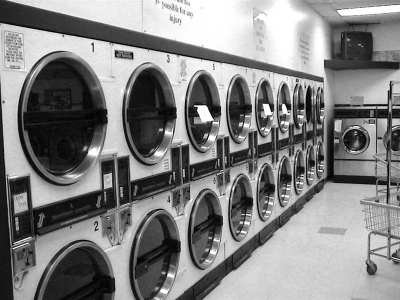
Now my question is wouldn't it make sense to do this with various absentee businesses. Let me elaborate. Theoretically, some laundromat is asking for 150k only 80k down (rest financed through seller for 5 yrs) with NI of 60k/yr (note, im not talkin gross revenue there). That's a return of nearly 100%. Hold it for the 5 yrs until all debt is paid off and then sell it for even more than you bought it because of various improvements. Now expand that to several businesses to make essentially a "portfolio". Say 3 laundromats, couple small stores, deli, you get the point.
Now I'm not sure if ppl r gonna say how is that PE? But I dont see how buying into a business with debt, with the intention of paying it down in order to resell is any different whether you're doing it with Bob's soap and suds or some huge MNC retail chain. I understand it may not be the "sexiest" thing in the world, but ill take making 300k+ and not having to work 100 hr weeks or answer to some douche bag over your "prestige" 100 out of 100 times. So basically my question is do these type of operations exist, is it an awful idea, etc.
Main reason I ask is because most ppl who talk about saving up money while doing their monkey time always talk about starting a HF with it. People's opinions on what amount is needed to start an actual HF will obviously vary, but I'd say its at least like 2 mil. Figure 10% return -> 200k. Whereas like 500k can get you a nice starting portfolio of say 4, maybe 5 businesses and pull you in easily over that 200k (not to mention wayyyyy less risky, seems like anything over 0% return in HF terms is considered doing 'well' in recent times). So am i missing something here, is it really the "sexy" factor, or do people not like making money unless they work 100+ hrs and get bitched at.
One final point, I'm talkin absentee businesses here. So you're only looking into companies where salaried management is in place. You're looking to be an owner/investor, not a manager.
| Attachment | Size |
|---|---|
| laundromat.jpg 19.28 KB | 19.28 KB |







Too long.
lol, yea it was pretty damn long. conciseness has never been my specialty. i expect a few tl;drs
So are you trying to start your own fund, find one that you can invest in, or just invest your own money personally?
There's really no reason that you can't do this on a smaller scale (it's similar to buying a property to be a landlord). I come from a blue collar background and I have considered purchasing a company and allowing my dad to run it - allowing him to draw a decent salary and turning the business over to someone I trust. A few things I've found:
For example, in my area there was a street sweeping business for $500k. It included 2 street sweepers and their book of business that included ~$125k of EBITDA. However, 2 towns made up 80% of their revenues and the contracts were up for bid in 12 and 16 months. The whole company depended on resigning those towns at favorable rates. Plus, the street sweeping business would suck.
This is called real estate private equity or real asset private equity. It happens all the time. Sure some focus on MNC, but many other focus on bob's soap and suds. They buy car washes, laundromats, tree farms, all of that shit.
The problem lies in the following places:
To do this on a reasonable scale you need funding. Funds can be expensive. This can impact your return significantly.
This:
...and then sell it for even more than you bought it because of various improvements.
It is like improving your house. Dollars in versus dollars of value-added rarely add up. If it were a retail center you would lease it up and that generates money but putting new tiles in your laundromat does not.
That said, at this price you would likely still have a good return even without the investment. Commercial Real estate investors make a living off it.
I would bet that laundromats trade on a cap rate though. If this thing pulled in $60k operating income, at $150k that implies a 40% cap rate. I would guess the value is closer to $500k (12% cap) and I would buy it and flip it for that...if this is a real opportunity.
The problem is that not many people are this stupid so good luck finding other commercial real estate pieces at a 40% cap rate.
well as far as the access to debt, most of the businesses ive found the debt is actually being offered by the sellers themselves. As far as im concerned i actually view that as a huge plus because it shows theyre confident in the business going forward (not selling a lemon) because theyre not trying to completely exit.
as for comparing this to a repe, i was under the impression repes were mostly just in it for like the rent, as opposed to the underlying business. whereas this you're actually operationally involved, even paying rent in most cases.
The only flag i can really see wud b inflated financials being presented to speed up the sale (kinda hard to audit Billy's laundromat i'd imagine). then again idk if a laundromat grossing 90k/yr is really too outlandish a claim to raise a flag imho
Ask for a few years worth of tax returns. On taxes they're incentivized to under estimate income. Try to pay a multiple of their tax $.
So long, so many pointless sentences... tl;dr
Edit: Okay, I read some of the middle parts and got the gist of what you are saying. I think people actually do this all the time (but perhaps without the intention of selling so quickly), but they don't call themselves PE professionals when they only own a few laundromats or gas stations. They just call it work.
Consequatur fugiat rerum illo iusto sint eum. Quia ipsum dignissimos distinctio facilis nihil consectetur. Doloremque occaecati explicabo est itaque. Rerum repellat delectus sit voluptas vel maiores blanditiis.
See All Comments - 100% Free
WSO depends on everyone being able to pitch in when they know something. Unlock with your email and get bonus: 6 financial modeling lessons free ($199 value)
or Unlock with your social account...