
Analyzing the Divergence: Synopsys C-Suite Liquidity vs. AI Market Euphoria


The Electronic Design Automation (EDA) sector is currently riding the crest of an unprecedented AI hardware supercycle. As a foundational layer for semiconductor architecture, Synopsys (SNPS) has benefited massively from the capital influx into AI-driven chip design. However, for institutional observers and fundamental analysts on platforms like Wall Street Oasis, reconciling current valuation multiples with forward-looking risk requires looking beyond standard earnings guidance. Monitoring executive capital allocation provides a pragmatic, unfiltered look into internal corporate expectations.
The Macro Context of EDA Valuations
While broader market sentiment remains firmly anchored to generative AI headlines, the underlying mechanics of semiconductor IP demand rigorous scrutiny. Synopsys operates in a highly consolidated market with massive, ongoing R&D requirements. Sustained multiple expansion in semiconductor software requires flawless execution and insulation from geopolitical supply chain shocks. When top-level management begins offloading shares during peak valuation cycles, it prompts a necessary evaluation of whether the current stock price has fully priced in future growth, or if structural industry headwinds are anticipated internally.
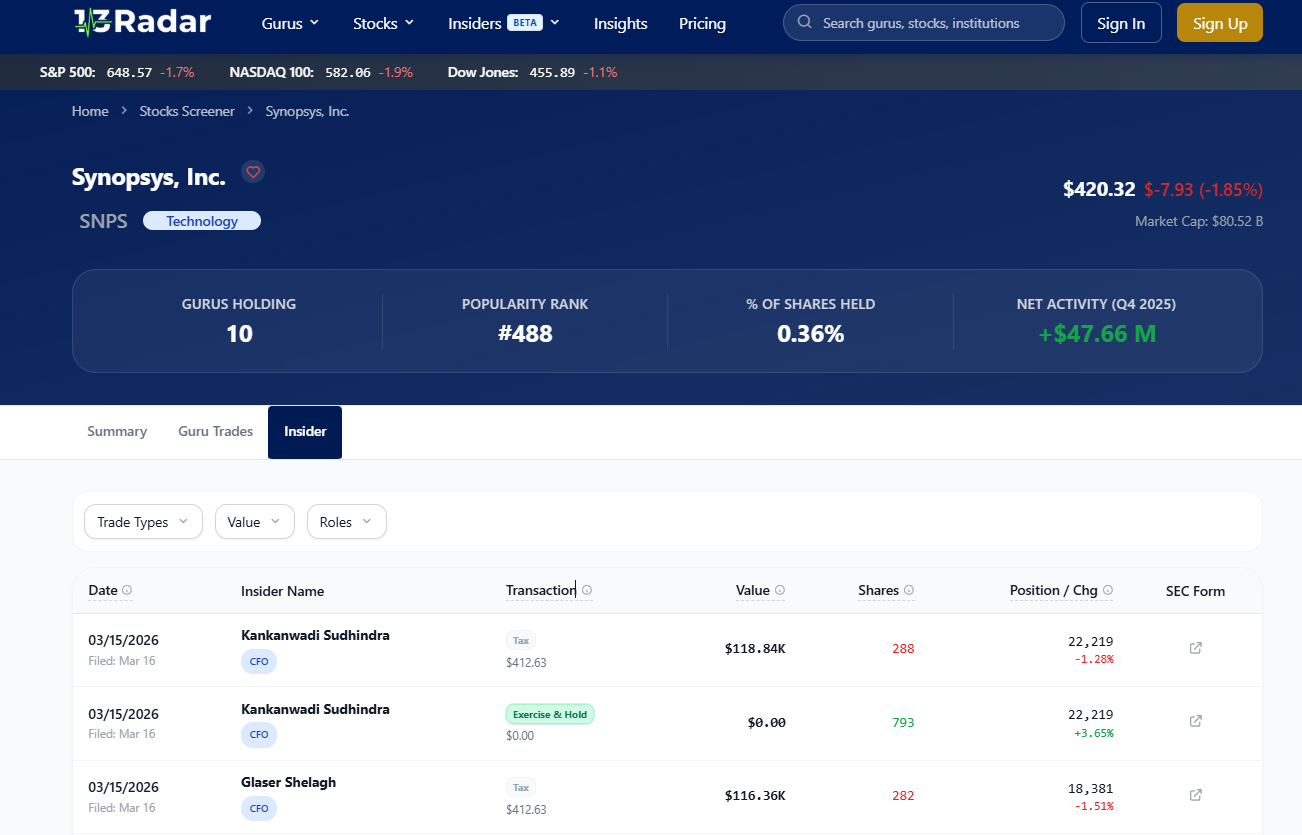
Decoding the Form 4 Flow
Navigating regulatory disclosures is a standard component of institutional due diligence. Recent Form 4 filings show a noticeable increase in executive sales across major tech companies, a trend that broadly aligns with historical profit-taking patterns during extended technology bull runs. The critical analytical task is separating algorithmic 10b5-1 disposition plans—which are pre-scheduled months in advance for tax and standard liquidity purposes—from discretionary, opportunistic selling by key corporate officers.
Dissecting the Transaction Mechanics
Key Institutional Observation Metrics:
- Volume vs. Vesting: Assessing whether disposition volume significantly outpaces newly vested equity grants.
- Clustering Effects: Identifying synchronized selling across multiple C-suite executives outside of standard post-earnings windows.
- Historical Baselines: Comparing current sell-side activity against an officer's multi-year transaction history to spot anomalies.
To establish a definitive trend, tracking the exact nature of these regulatory events is required. Observing the live metrics regarding SNPS insider trading today serves as a baseline for understanding current executive sentiment. Rather than acting as a standalone trading signal, these data points function as a necessary layer of fundamental risk management when modeling future scenarios in the semiconductor space. The focus remains strictly on structural market mechanics and quantitative data observation.






Et adipisci iure doloribus explicabo sed harum facere. Expedita consequatur tempore et totam qui et. Nemo aspernatur in quaerat quia eveniet. Et non rerum rerum est corporis voluptatem amet voluptas. Et eligendi repellendus non.
Vitae vero dolores omnis non. Vitae odit sit et debitis repellendus sequi et. Est ab est enim dicta vitae non sunt. Odio sed at repellat voluptatem sunt fugiat fuga. Illo sunt esse magnam fuga officia. Est iste provident est consequatur dolores. Repellat blanditiis debitis rerum ut enim eaque.
See All Comments - 100% Free
WSO depends on everyone being able to pitch in when they know something. Unlock with your email and get bonus: 6 financial modeling lessons free ($199 value)
or Unlock with your social account...