This post was inspired by the FT's Big Read on the Kraft-Unilever deal: (This account is too new to link) look up "The $143bn flop: How Warren Buffett and 3G lost Unilever"
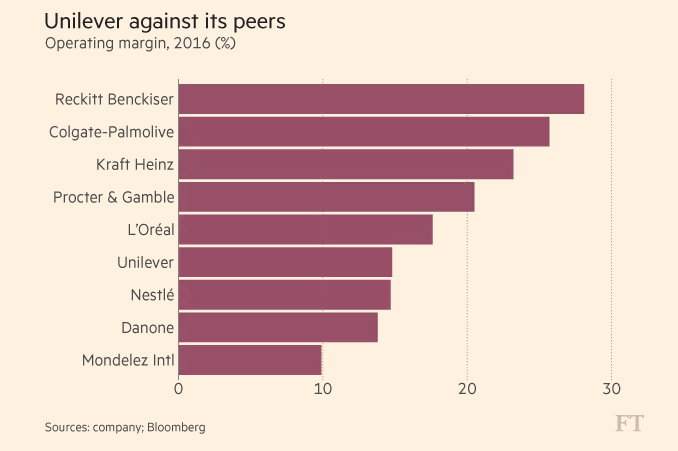
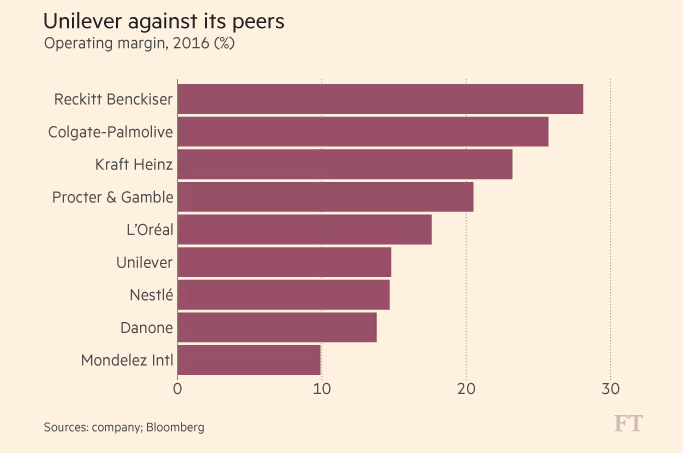
There were two charts in the above article that really got me thinking (attached to the post).
Now if we look at the charts, there is a significant divergence between Kraft Heinz and Unilever. The reason this got me thinking is we have the PE run company (Kraft Heinz) vs. the regular company (Unilever). Kraft Heinz is a leader in terms of operating margins 23% approx. whereas Unilever's operating margin is around 15%. However, if we look at the second chart Unilever is growing at around 3.7% and Kraft Heinz is growing at a meager 0.3%.
3G Capital has not been shy about their methods of running portfolio companies, they aggressively cut costs through headcount reductions, reducing capex, etc. the CEO of Unilever on the other hand is quoted in the above article as saying he prefers significant investment in growth and environmental sustainability initiatives. The supposed effect of these two approaches can be reflected in the charts above, Unilever is growing sales, but is significantly less profitable than its peers, and Kraft Heinz is one of the most profitable companies in the industry, but its growth is essentially stagnant.
The reason why these charts interested me, is which approach is correct to running a company? Should we look to aggressive cost cutting and maximizing profitability (even if it sacrifices future growth), or should the approach be focused on making meaningful investments in the future to maximize growth, even if it comes at the cost of profitability.
My opinion is that the approach should reside somewhere in-between, Kraft Heinz has likely shot itself in the foot in reference to the future (albeit whilst maximizing returns for their PE sponsor) due to their lack of investment in growth, and Unilever in my opinion could use some cost cutting in order to improve its profit margins.
Now I leave it to you monkeys, what approach would you take to running the respective companies?
| Attachment | Size |
|---|---|
| ft_chart_1.png 32.48 KB | 32.48 KB |
| ft_chart_2.png 33.16 KB | 33.16 KB |