
Institutional Rotation: Deconstructing the "Second Derivative" AI Trade


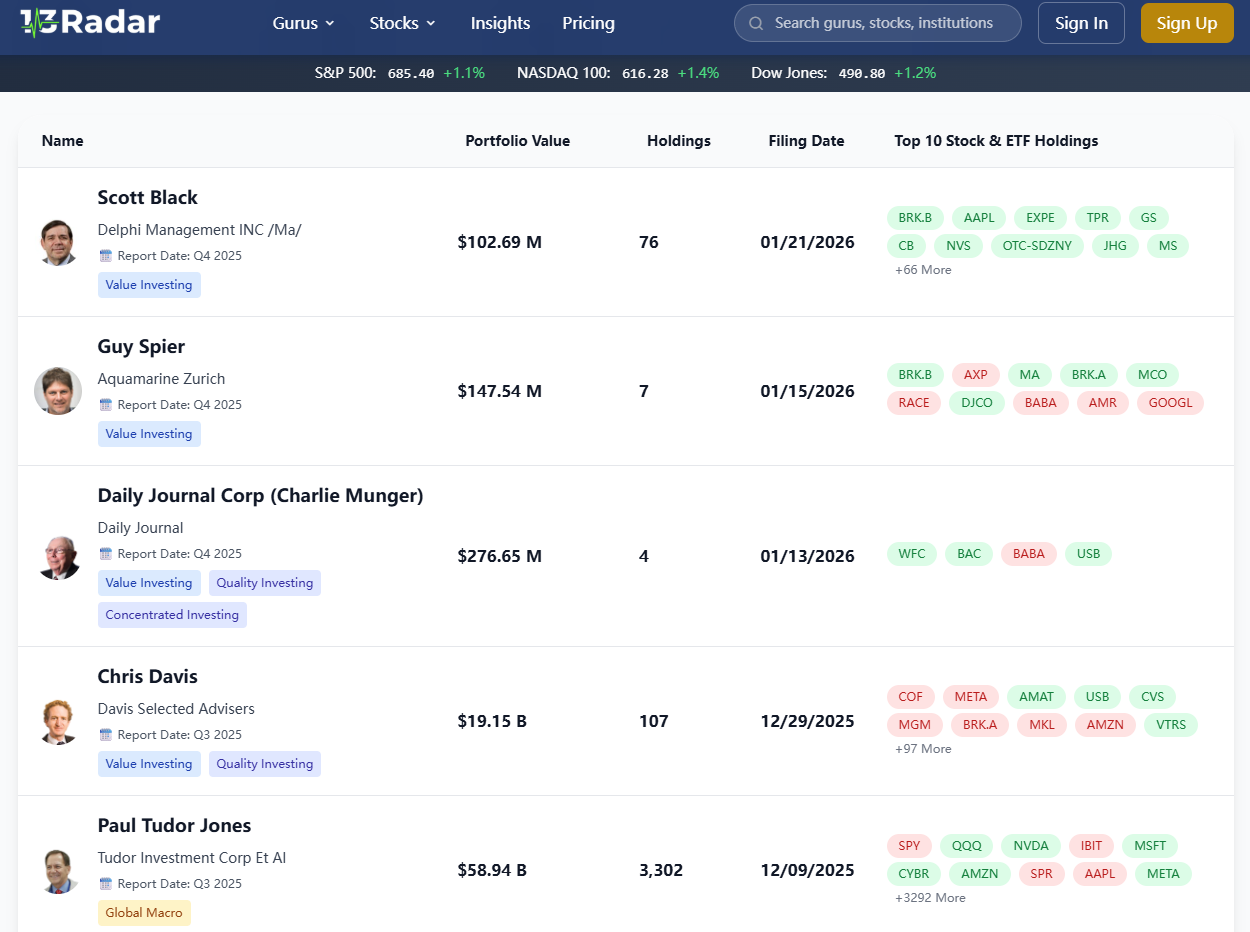
The initial phase of the Artificial Intelligence investment cycle—characterized by indiscriminate buying of semiconductor beta—appears to be consolidating. As the market digests the Q1 2026 macro environment, a review of institutional 13F filings indicates a structural shift in capital allocation. The "monolith" of Big Tech is fracturing, with smart money flows moving away from crowded upstream plays toward downstream integration and infrastructure. An analysis of the top 10 investment gurus suggests that the consensus trade has evolved from a momentum play into a fundamental discrimination exercise.
The Capex Cycle: Infrastructure as the New Alpha
While the initial liquidity surge benefited GPU manufacturers, the current institutional focus has shifted to the physical constraints of scaling LLMs.
The "Pick and Shovel" Thesis 2.0:
We are observing a noticeable accumulation in sectors related to Data Center Infrastructure—specifically power generation (utilities/nuclear), thermal management, and grid modernization. The logic implies a belief that the bottleneck for AI scaling is no longer silicon availability, but energy capacity. This rotation represents a move into assets with lower valuation multiples compared to the semiconductor index (SOX), offering a more favorable risk/reward profile in a rate-constrained environment.
⚖️ Factor Rotation: Quality over Hyper-Growth
A granular look at the portfolios of managers like Ken Fisher or the quantitative strategies of Renaissance Technologies reveals a tightening of quality filters.
Balance Sheet Efficiency:
In a "higher-for-longer" interest rate regime, the cost of capital has become a primary screening metric. The data shows a divestment from unprofitable, debt-reliant software mid-caps. Capital is instead consolidating into Free Cash Flow (FCF) yielders—companies that can self-fund their AI integration without tapping into expensive debt markets. This "barbell" approach—pairing mega-cap cash cows with short-duration fixed income—suggests a defensive positioning against potential credit spreads widening.
The Private/Public Dislocation
Finally, there is a divergence between public equity positioning and private market signals. While public 13F disclosures show a trimming of tech exposure, crossover funds appear to be deploying capital into late-stage private equity/venture rounds focused on specific vertical applications (e.g., LegalTech, BioTech).
For public market observers, this signals that the "easy beta" is gone. The market is transitioning to a stock-picker's environment where dispersion returns. The correlation between the "Magnificent Seven" is breaking down, necessitating a more rigorous bottom-up analysis of individual unit economics rather than broad thematic ETF exposure.






Impedit omnis officia quo tempore doloremque aperiam. Dolor id dolore saepe natus sed odio. Ipsam ea non voluptatem aperiam in quo neque. Voluptatem ut cumque aut ut. Ducimus quas quasi animi est autem.
At quia voluptas esse quod vitae eum. Quaerat consequatur sit porro eos debitis. Quod quod aut praesentium et molestiae qui autem. Magnam perferendis voluptatum et ex porro molestias. Eius necessitatibus dolor rem ex. Voluptas excepturi voluptatum aut ut.
Exercitationem nam iure molestiae fugit quia quia repudiandae. Dolorem non et quod ut non. Quas non aut quia delectus est. Mollitia sed ut et excepturi quisquam natus fuga. Ipsa deleniti reiciendis accusantium.
Qui voluptatum quia tenetur dolor omnis. Laborum qui eum consequuntur quod rerum. Est rerum commodi aliquam inventore. Sunt quo ad sed atque aut. Dolorum aut eum dolorem omnis tempore repudiandae. Quisquam ut voluptatum blanditiis. Veniam voluptas vitae expedita dicta neque qui.
See All Comments - 100% Free
WSO depends on everyone being able to pitch in when they know something. Unlock with your email and get bonus: 6 financial modeling lessons free ($199 value)
or Unlock with your social account...