
Signal vs. Noise: Evaluating Open-Market Form 4 Accumulations in the Current Cycle


In an environment dominated by algorithmic flows, passive indexing, and macroeconomic volatility, discretionary funds are constantly hunting for high-conviction idiosyncratic signals. While share repurchases are standard corporate finance mechanics, open-market purchases by corporate executives remain one of the few pure indicators of asymmetric information. There is a distinct analytical difference between a corporate treasury deploying excess cash and a CEO risking their personal after-tax liquidity to acquire equity.
The Mechanics of Open-Market Conviction
From a quantitative perspective, not all insider transactions are created equal. Scheduled 10b5-1 sales and routine option exercises carry minimal signal value due to their programmatic nature. Conversely, open-market buying is entirely discretionary. When operators proactively accumulate shares during a drawdown, it typically suggests an internal consensus that the market has fundamentally mispriced the firm's near-term catalysts or long-term cash flow generation. Historically, during localized sector drawdowns, such as the previous volatility periods in regional banking, Form 4 filings often show a noticeable increase in concentrated executive purchases prior to stabilization and mean reversion.
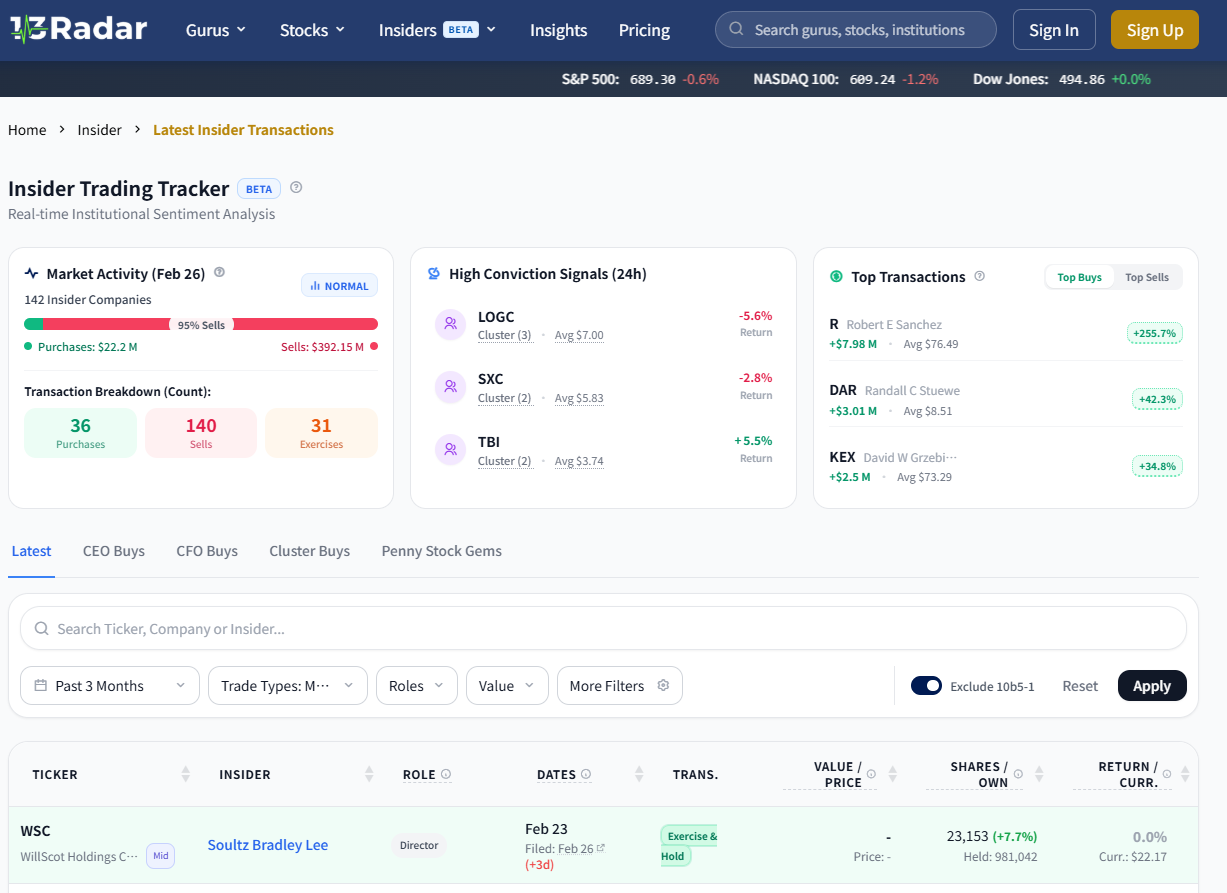
📊 ASSESSING THE "CLUSTER BUY" MULTIPLIER EFFECT 📊
A single independent director purchasing a nominal amount of stock is often dismissed as optical window dressing. However, the signal-to-noise ratio shifts dramatically during a cluster buy. When the CEO, CFO, and key board members simultaneously deploy personal capital, the probability of an impending positive catalyst—such as an unannounced strategic review, M&A activity, or a material earnings beat—increases significantly. These synchronized accumulations demonstrate a shared conviction among the C-suite that is rarely captured in traditional sell-side consensus models.
Information Asymmetry as an Alpha Factor
For institutional analysts and event-driven funds, screening for these regulatory anomalies is a standard component of the diligence process. The objective is not to mechanically mirror the C-suite, but to utilize their capital allocation as a preliminary screening mechanism to uncover structurally mispriced equities. Integrating a robust analysis of recent insider trading into a broader fundamental framework allows analysts to validate their own thesis against the actions of those with the highest degree of information asymmetry.
In a market where traditional informational edge is rapidly decaying, observing how operators allocate their own capital remains a highly durable metric for risk assessment.






Culpa cum numquam et necessitatibus odio. Impedit dolorum rerum sit rerum.
Voluptatem mollitia ut vero eveniet. Enim ipsum eligendi nobis. Veniam nobis totam vero fugiat. Alias reprehenderit ad consequatur illo consequatur consequatur adipisci ab.
See All Comments - 100% Free
WSO depends on everyone being able to pitch in when they know something. Unlock with your email and get bonus: 6 financial modeling lessons free ($199 value)
or Unlock with your social account...