
Sophomore, low semi-target, late start into finance recruiting. Feasible for equity research/credit research/risk? What technicals should I actually be learning right now?


Background: Econ major/Math minor Sophomore at a low semi-target. Freshman year I was on a grad-school-for-econ-research track ( was gunning for a macro/strategy type role eventually requiring a masters or PhD). Realized a few weeks ago I'd rather get into industry now instead of waiting years for that payoff, so I pivoted- but which means I have minimal industry connections, club involvement, or financial/accounting coursework (econ isn't in the business school here) compared to people who've been recruiting since freshman year.
I want a role where I could be compensated at the level I want, but still utilize my economics/quantitive, and research background heavily, as well as a path that I believe is feasible to land a role, despite starting late a bit late in recruiting. I decided on equity research, credit research, and risk management. With the order giving the desired levels of roles I’d want to end up in, with first being the highest.
I’d appreciate any advice/insight regarding my questions:
- Realistically, are these roles still feasible from where I'm starting, or am I kidding myself?
- How much do the technicals for each actually cross over in equity research, . credit research and risk? To what extent do I need to specialize in one path before an internship, versus learning the differences during the internship in whichever I would get?
- Which of these skills can I realistically self-teach now vs. which ones I'll basically only pick up once I'm actually in an internship? Resources I can use? For example, would the invesment banking 400 questio guide help?
- For landing these types of internships at Boutique/buldge bracket sell side/major buy side shops my junior year internship, what should I be looking for this upcoming summer? Are sophomore leadership/diversity programs/early careeer programs (Citi, MS, Deutsche Bank, etc.) still feasible or am I too late at major banks/buy side shops? Would something like wealth management at a local firm for the upcoming summer still prove to be helpful?
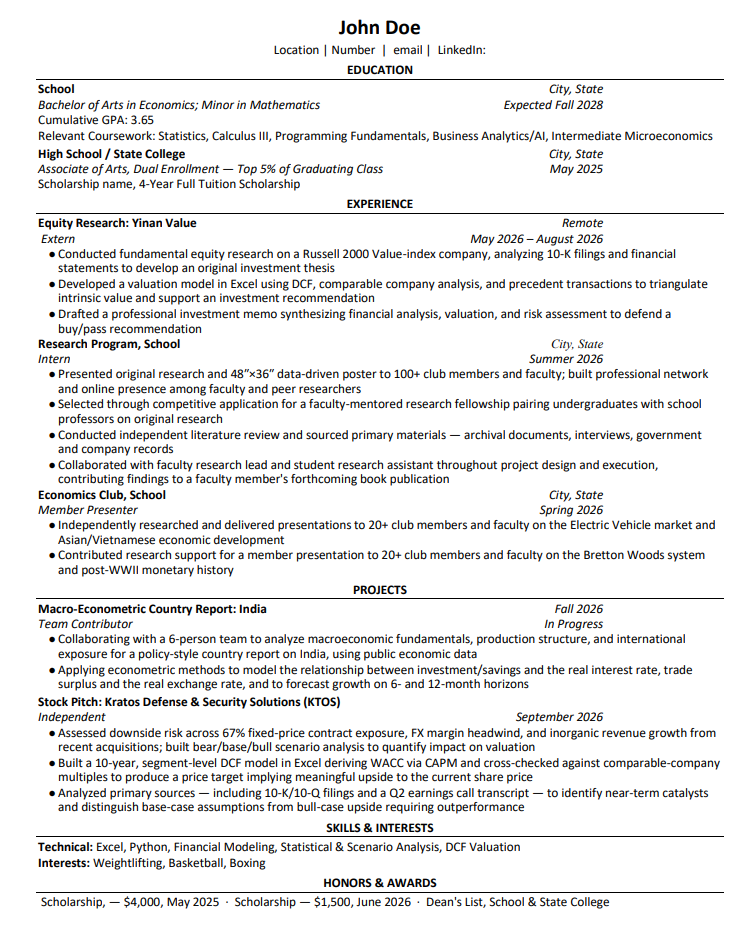
Resumes for context, first is general, second is oreinted for risk roles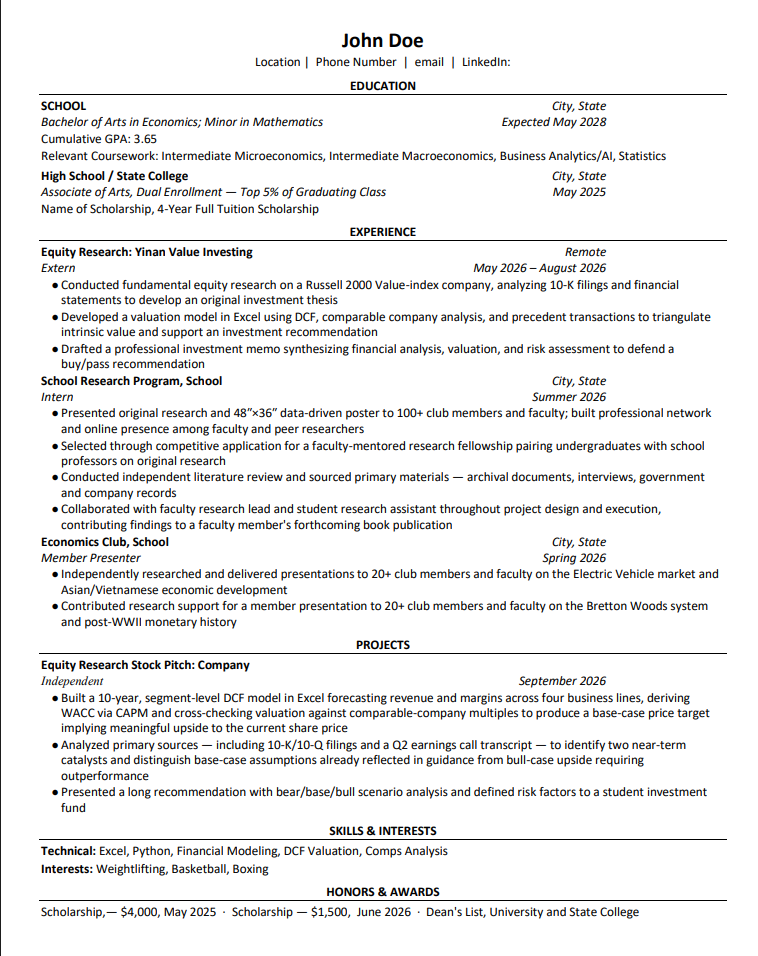






Based on the most helpful WSO content, here's a breakdown of your situation and actionable advice:
Feasibility of Roles:
Technical Skills to Focus On:
The technicals for equity research, credit research, and risk management overlap significantly, but there are nuances: 1. Core Skills Across All Roles: - Financial Modeling: Learn how to build 3-statement models, DCFs, and comparable company analyses. These are critical for equity and credit research. - Accounting Basics: Understand financial statements, key ratios, and how to analyze a company's performance. - Excel Proficiency: Advanced Excel skills are non-negotiable. Learn shortcuts, pivot tables, and basic VBA if possible. - SQL and Python: These are increasingly valuable for data analysis in risk management and credit research. Python is particularly useful for quantitative analysis and automation.
Role-Specific Skills:
Self-Teaching Resources:
Specialization vs. Generalization:
Summer 2024 Internship Strategy:
Resume Tips:
Final Thoughts:
You’re not too late, but you need to be proactive. Focus on building technical skills, networking aggressively, and gaining any relevant experience this summer. With dedication, you can position yourself competitively for equity research, credit research, or risk management roles.
Sources: Programming/Technical Skills for Finance: SQL and Python, Future of Equity Research - 12+ Months into MIFID II, Future of Equity Research - 12+ Months into MIFID II, Learning coding on your own for finance?, Credit Analyst Q&A
Didn’t read this but you’re resume looks good for ER. Try doing another like HF type internship if you are set on public’s also experience in privates/IB/VC or in industry helps, even as an intern
Credit Research and Risk Management are good, achievable goals. A mistake people make with ER often (I did myself) as assume it isnt as "competitive" versus IBD, but because there are much less seats it ends up being just as competitive.
Alias cupiditate ducimus maxime eos aliquid. Non sed atque voluptate. Ut veritatis ducimus aspernatur ullam. Quasi ullam veniam sunt quis eum soluta autem.
Voluptatem facilis labore magnam at molestias. Saepe et aut modi laudantium. Aut praesentium et ea nihil assumenda et modi.
See All Comments - 100% Free
WSO depends on everyone being able to pitch in when they know something. Unlock with your email and get bonus: 6 financial modeling lessons free ($199 value)
or Unlock with your social account...