
Pro-Forma P&L and B/S Help Needed

Hi guys, I recently did a case study for an MM investment bank and I would love some input on the case study model I created as I was declined for the position. The case study was centered around creating a pro-forma P&L as well as a B/S for a cash-free, debt-free transaction. Some more information below:
P&L:
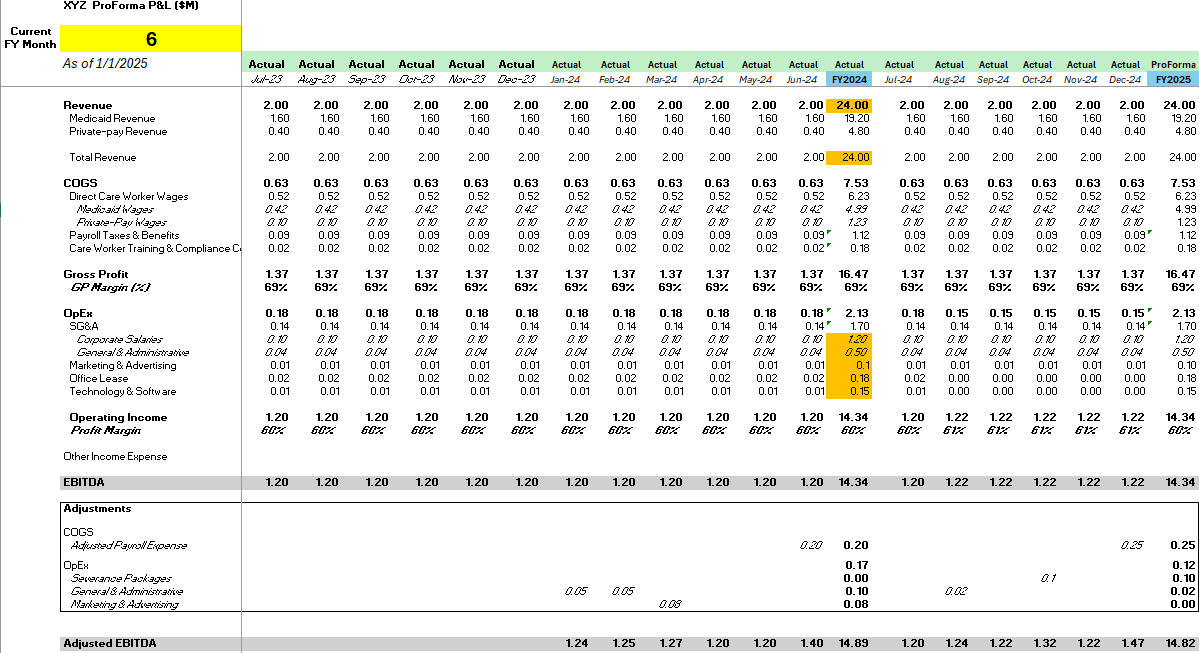
- The numbers in Orange are hardcoded based on the numbers that were provided in the text of the information for the case study.
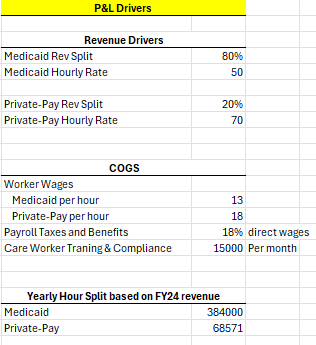
- There are 2 sources of revenue, Medicaid revenue and Private-Pay revenue, the photo with the drivers shows the relevant information that was provided from the text.
- The goal was to assume today is 1/1/25, the FY ends in June and I was given the end of year P&L financials for FY2024. I had to break the P&L out by month and show EOY Pro-forma numbers for FY2025.
- The adjustments were in text form from the information given and I just put them in the Excel.
- I only had to project for FY25.
B/S:
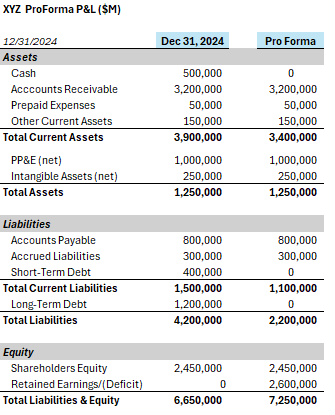
- The balance sheet assumes a cash-free, debt-free transaction
- Dec. 31, 2024 column was given in the information provided
Any suggestions on the things I did wrong or change would be great! Also I can send over the excel if you need to see formulas in a DM.






Based on the most helpful WSO content, here are some suggestions and tips for improving your pro-forma P&L and balance sheet (B/S) for a cash-free, debt-free transaction:
Pro-Forma P&L:
Hardcoded Numbers:
Revenue Sources:
Monthly Breakdown:
Adjustments:
Projections:
Balance Sheet (B/S):
Cash-Free, Debt-Free Assumptions:
Starting Point:
Consistency:
Pro-Forma Adjustments:
General Tips:
If you need more specific feedback, consider sharing your Excel model with someone experienced in financial modeling for a detailed review. Good luck!
Sources: Dear investment bankers: Would you befriend me? (advice needed, please), Investment Banking Analyst: 15 Things I Wish I Knew, Having serious thoughts about B-school for the first time - can anyone offer any advice?, How the hell do I get my grades up, Tips & Suggestions for adapting as a new Investment Banking Analyst (mine and yours)
Would be helpful to have more info around the prompt / information provided. Tough to opine purely based on some screenshots and your restating of the question.
Ex: kind of weird to have 0 PF cash in the business assuming this is an LBO. Were there no assumptions given around min cash balance? If this was an LBO case and they didn’t give a min cash assumption, I would have made one myself and noted it.
The prompt was very bland and didn’t include much. There was no mention of creating an LBO and instead create a P&L and b/s for a sellside transaction.
To answer your question on cash, the only assumptions about cash that were stated was a cash free transaction which I took the cash out of there since it would get taken out of the business and added to the total proceeds to shareholders in the flow of funds analysis. Not sure if this is right but also not sure how to balance this out in the balance sheet once taking this out.
Hope this helps a little more but appreciate the commentary you gave!
first advice, remove grid lines please
share the spreadsheet together with the input sheet and we can do something for you
PM me, happy to help
Illo sequi laudantium ducimus laudantium accusantium dolorum dolor. Vel non fugiat iste mollitia ut ad.
Et consequuntur voluptatibus ratione sapiente. Rerum dolorum earum hic. Hic nulla ipsum omnis deleniti delectus tenetur sed. Eum sed labore officiis cumque facilis sit.
See All Comments - 100% Free
WSO depends on everyone being able to pitch in when they know something. Unlock with your email and get bonus: 6 financial modeling lessons free ($199 value)
or Unlock with your social account...